



How to Buy CJC-1295 No DAC in Oman
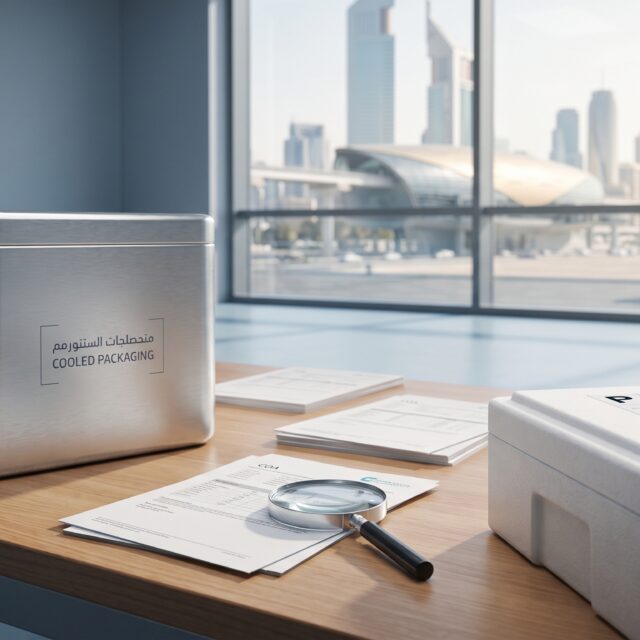
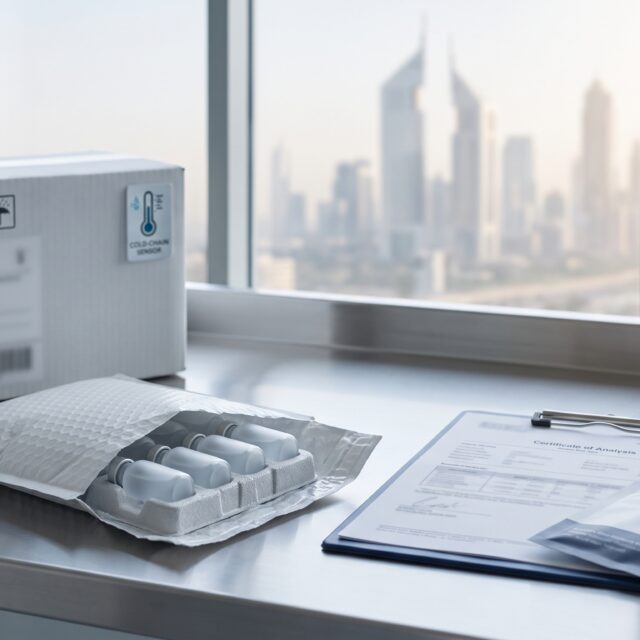
To securely buy CJC-1295 No DAC in Oman, researchers must prioritize GCC-based suppliers offering third-party HPLC testing (≥98%) and active cold-chain logistics. Sourcing locally bypasses complex Bayan customs delays and prevents thermal degradation of research peptides during extreme Gulf temperatures.
Buyer Checklist: Sourcing Peptides in Oman
- Purity Verification: Demand batch-specific HPLC and Mass Spectrometry (MS) documentation showing ≥98% purity.
- GCC Logistics: Ensure the supplier uses active cold-chain packaging tailored for Middle Eastern climates.
- Customs Compliance: Verify that vials are strictly labelled “For Research Purposes Only” alongside accurate commercial invoices.
- Regional Support: Opt for suppliers providing local Gulf Standard Time (GST) support and secure, encrypted payment options.
For research professionals and procurement managers mapping out their next in-vitro protocol, Oman presents unique logistical and regulatory challenges. Ensuring the stability of temperature-sensitive biological compounds in the Gulf climate requires more than just finding an overseas supplier with cheap stock. It demands a comprehensive understanding of regional freight transit, electronic customs documentation, and rigorous analytical testing methodologies.
Understanding CJC-1295 No DAC in a Laboratory Context
CJC-1295 No DAC, frequently referred to in scientific literature as Mod GRF 1-29, is a synthetic 29-amino acid peptide that acts as a short-acting Growth Hormone-Releasing Hormone (GHRH) analogue. Its structural design was specifically formulated to mimic natural pulsatile release in in-vitro assays and animal models, featuring a brief half-life of roughly 30 to 60 minutes.
Because of its precise biological mechanism and structural fragility, maintaining chemical integrity from the synthesis laboratory to the research bench in Muscat, Sohar, or Salalah is non-negotiable. Even minor thermal degradation can truncate the peptide chain, altering its receptor-binding affinity and invalidating expensive research data.
Mod GRF 1-29 vs. DAC: A Technical Distinction
For informed buyers mapping out their laboratory requirements, understanding the exact distinction between CJC-1295 with DAC (Drug Affinity Complex) and CJC-1295 No DAC (Mod GRF 1-29) is vital.
The “No DAC” variant is engineered with four specific amino acid substitutions (typically substituting naturally occurring amino acids with d-alanine or other stabilising analogues) that prevent rapid enzymatic degradation by DPP-IV while maintaining its short physiological half-life. This precise duration is highly sought after in research protocols designed to study pulsatile hormone secretion mechanics.
Conversely, the addition of the Drug Affinity Complex covalently binds the peptide to endogenous serum albumin, extending its half-life to several days and resulting in a continuous, non-pulsatile release profile. Procurement staff must ensure they are ordering the exact nomenclature required for their study, backed by corresponding MS reports verifying the absence of the DAC complex.
Validating Purity: How to Read HPLC and COA Data
High-purity peptides are exceptionally complex and expensive to synthesise. Without rigorous testing, laboratories run the risk of receiving vials contaminated with synthesis by-products, truncated peptide chains, or heavy metal solvents left over from the manufacturing process.
A trustworthy supplier will publicly publish a Certificate of Analysis (COA) for every batch. However, a COA is only a summary document; buyers must look for the raw analytical data:
- High-Performance Liquid Chromatography (HPLC): This method separates the components in a mixture. Researchers should look for a singular, distinct peak on the HPLC chromatogram, with the “Area %” confirming the purity is ≥98%.
- Mass Spectrometry (MS): This verifies the molecular weight. The MS report must show a dominant peak that precisely matches the theoretical molecular weight of CJC-1295 No DAC (approximately 3367 g/mol for the modified version, though exact weights vary slightly by specific salt formulations).
If a vendor selling to the Omani market cannot produce these documents from an independent, accredited third-party laboratory, procurement should be halted immediately.
Navigating the Bayan Customs System for Peptides
The importation of synthetic peptides and biochemical compounds into the Sultanate of Oman is meticulously regulated. The Royal Oman Police (ROP) Customs and the Ministry of Health (MOH) utilise the electronic Bayan customs system to scrutinise all inbound shipments containing biological or chemical materials.
Standard international parcels arriving via traditional postal services from the US or Asia are frequently delayed for weeks or outright seized if the documentation is not flawless. Omani authorities require clear, unambiguous declarations that the contents are synthetic peptides designated strictly for laboratory research. This must be accompanied by matching commercial invoices featuring the correct HS (Harmonized System) codes for research chemicals, alongside Material Safety Data Sheets (MSDS).
Regional suppliers who specialise in GCC logistics pre-clear many of these bureaucratic hurdles. Proper “Research Purposes Only” designations, combined with established commercial shipping corridors, translate to predictable delivery windows without the bottlenecks of long-haul international freight.
Desert-Proofing: Why Cold-Chain Logistics Are Essential
One of the most profound risks when dealing with any peptide bound for Oman is the local summer climate, which routinely pushes ambient temperatures above 45°C. Lyophilised (freeze-dried) peptides possess a baseline degree of stability, but extended exposure to extreme heat during transit will denature the amino acid sequence.
Global imports typically require five to ten business days in transit. During this prolonged journey, the passive cooling methods (such as standard gel packs) used by most international vendors often fail before the parcel even reaches the regional sorting facility. Once the cooling agent melts, the peptide is subjected to the blistering temperatures of airport tarmacs, customs warehouses, and un-airconditioned delivery vehicles.
In contrast, procuring supplies from a regional GCC-based distributor mitigates this thermal risk. By leveraging robust networks like peptides UAE next-day delivery routes, researchers can ensure their materials remain within a tightly controlled thermal envelope. Fast-tracked routing from regional hubs in Dubai directly to Omani research centres means the active cold-chain packaging arrives intact, keeping the lyophilised powder safe.
Secure Payment and GCC Support Infrastructure
Another barrier for institutional and private researchers in Oman is navigating international payment gateways. Many overseas peptide vendors only accept unconventional payment methods that are incompatible with university procurement cards or corporate expense policies.
A premium regional supplier provides standard, encrypted credit card processing gateways that comply with local banking regulations. Furthermore, having access to customer support in Gulf Standard Time (GST) is invaluable. Whether you need to track a delayed courier, update a delivery address in Muscat, or request a specific batch’s MSDS for a laboratory audit, real-time WhatsApp or email support prevents minor logistical hiccups from becoming major research delays.
Best Practices for Handling in Omani Labs
Once your CJC-1295 No DAC arrives safely, proper handling is required to maintain the 98%+ purity you paid for:
- Long-Term Storage: Unreconstituted (lyophilised) vials should be immediately transferred to a laboratory freezer and stored at -20°C or below, away from direct UV light.
- Reconstitution: When preparing for an in-vitro assay, the peptide should be reconstituted using sterile bacteriostatic water or sterile saline, depending on the protocol’s requirements.
- Handling: Solvents should be added slowly, dripping down the side of the glass vial to avoid damaging the fragile peptide bonds. Never shake the vial vigorously; instead, gently swirl it until the solution is completely clear.
- Post-Reconstitution Storage: Once mixed, the solution must be kept continuously refrigerated between 2°C and 8°C and utilised within the timeframe dictated by the specific research protocol (typically 14 to 30 days).
Conclusion: Securing Your Supply Cycle
Ultimately, deciding where to procure CJC-1295 No DAC in Oman relies on balancing verified product integrity with logistical safety. Avoiding thermal degradation and seamlessly navigating the Bayan customs system requires a supplier that is fully integrated into the local GCC infrastructure.
By demanding third-party HPLC verification, insisting on robust cold-chain packaging, and leveraging regional dispatch from hubs like Dubai, you can ensure your research reagents arrive pristine and ready for immediate laboratory application. Ready to upgrade your laboratory’s reagent supply chain? Explore batch-tested CJC-1295 No DAC and benefit from reliable regional logistics at NOVA Labs.
Disclaimer: The products mentioned in this article are strictly for research purposes only. They are not approved for human consumption, therapeutic use, or clinical treatment.
References
- Jette, L., et al. (2005). “Human Growth Hormone-Releasing Factor (hGRF)1-29-Albumin Bioconjugates Demonstrate Enhanced Pharmacokinetics and Pharmacodynamics.” Endocrinology, 146(7), 3052-3058.
- Directorate General of Customs, Royal Oman Police. (2023). “Bayan Customs Clearance System: Import Procedures for Chemical and Biological Materials.”
- National Center for Biotechnology Information (NCBI). PubChem Compound Summary for CID 9831969, Mod GRF 1-29.
- NOVA Labs Operations. “GCC Cold-Chain Logistics: Ensuring Peptide Stability in the Middle East.”
- Same Day Peptide Delivery in Oman: Heat, Timing, and Cold-Chain Logistics – NOVA Labs
- Next Day Peptide Delivery Oman: GCC Logistics & Handling Guide – NOVA Labs
- Best Peptide Shop Oman: A Buyer’s Guide to Quality & Shipping – NOVA Labs
- Cold Chain Logistics Oman for Pharmaceutical Distribution – Clarion Shipping
Frequently asked questions
What is the difference between CJC-1295 with DAC and No DAC?
CJC-1295 No DAC (Mod GRF 1-29) features a short half-life of 30 to 60 minutes, mirroring natural pulsatile release in research models. The DAC version includes a Drug Affinity Complex that extends the half-life to several days for a continuous release profile.
How should CJC-1295 No DAC be stored in Oman?
To prevent thermal degradation in the extreme GCC climate, lyophilised CJC-1295 No DAC powder should be kept away from direct sunlight and stored in a laboratory freezer below -20°C for optimal long-term stability.
What purity level is required when buying CJC-1295 No DAC?
Researchers should require a minimum purity of 98%. This metric must be verified by batch-specific, independent third-party High-Performance Liquid Chromatography (HPLC) and Mass Spectrometry (MS) testing.
Why do international peptide orders often get delayed in Oman?
International shipments face strict scrutiny under the electronic Omani Bayan customs system. Orders are frequently delayed or seized if they lack precise commercial documentation, material safety data sheets, or explicit 'For Research Purposes Only' labelling.
Can CJC-1295 No DAC be used for human consumption?
No. CJC-1295 No DAC is strictly synthesized and sold for in-vitro laboratory research and animal models. It is not approved for human use, consumption, dietary supplementation, or therapeutic applications.
Nova Labs buyer tools
Ready to verify stock, testing and delivery?
Use the product page and lab report section to check availability, documentation, delivery timing and support before placing an order.
- COA / test-report checks
- Oman delivery context
- Cold-chain handling
- COD and card payment options
- WhatsApp support