

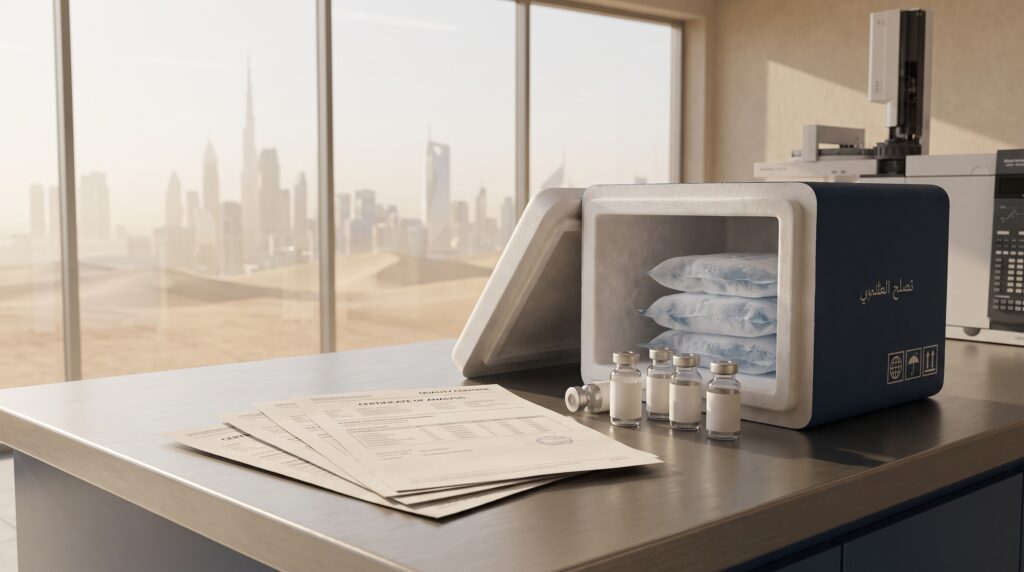
Sourcing HPLC Tested Peptides Saudi Arabia: The GCC Procurement Challenge
Sourcing high-quality research materials requires uncompromising analytical validation, particularly when operating within the Gulf Cooperation Council (GCC). For laboratories, academic institutions, and independent researchers, procuring hplc tested peptides saudi arabia presents a unique set of logistical and verification challenges. Extreme climate conditions, strict regulatory enforcement by the Saudi Food and Drug Authority (SFDA), and an influx of opaque suppliers demand a rigorous approach to quality control.
Finding a trustworthy supplier is not just about comparing prices; it is about verifying cryptographically secure testing data, understanding the molecular fragility of compounds in transit, and ensuring seamless compliance with local customs. This guide explores exactly how to evaluate documentation, read purity reports, and select logistics pathways that protect the integrity of your research materials.
Quick answer / Buyer checklist: When procuring HPLC tested peptides in Saudi Arabia, buyers must verify third-party Certificates of Analysis (COAs), ensure Mass Spectrometry (MS) confirms molecular identity, and select lyophilized powders to survive 45°C regional transit. Always check that the batch lot number matches a cryptographically secure testing database to avoid altered documents.
Survival of the Purest: Lyophilized vs. Liquid Transit
One of the most significant variables when ordering research compounds in the Middle East is the regional climate. During peak summer months, ambient temperatures across Saudi Arabia and the UAE frequently exceed 45 degrees Celsius. This environmental reality makes the physical format of the product critical to its survival.
The Danger of Reconstituted Liquids
Certain regional suppliers heavily market pre-filled liquid peptide pens or vials. While these may appear convenient, reconstituted liquid peptides are molecularly fragile. The moment a compound is introduced to a solvent (such as bacteriostatic water), its degradation clock accelerates exponentially. When exposed to severe GCC transit heat, the peptide chains within these liquid solutions begin to break down, denature, and lose their structural integrity within hours.
The Lyophilized Standard
For cross-border transit to Riyadh, Jeddah, or Dammam, the only scientifically sound format is lyophilized (freeze-dried) powder. Lyophilization removes moisture from the compound under a vacuum, forcing the peptide into a dormant, highly stable state. When sealed securely, lyophilized powders can withstand extreme temperature fluctuations without compromising the compound’s structure. Researchers evaluating an hplc tested peptides supplier saudi arabia should immediately disqualify any vendor shipping pre-mixed liquid solutions across borders during the summer, as the product received will rarely match the purity stated on the original factory report.
Decoding the Data: HPLC Purity vs. Mass Spectrometry (MS)
Many vendors claim to sell pure products, but trust in scientific procurement must be grounded in independent, verifiable data. A complete analytical profile requires two distinct testing methodologies: High-Performance Liquid Chromatography (HPLC) and Mass Spectrometry (MS). Understanding the difference between the two is vital for conducting a thorough supplier audit.
High-Performance Liquid Chromatography (HPLC)
HPLC is the standard method for determining the chemical purity of a batch. By pushing the dissolved compound through a column under high pressure, the machine separates the sample into its individual components. The resulting graph, called a chromatogram, displays a dominant peak representing the primary compound, alongside smaller peaks representing synthetic impurities or byproducts. High-quality research compounds should demonstrate an HPLC purity of 98% or higher. However, HPLC alone only tells you how pure a substance is—it does not confirm what the substance actually is.
Mass Spectrometry (MS)
To confirm the molecular identity of the compound, Mass Spectrometry is required. MS analyzes the exact molecular weight and amino acid sequence of the sample. If a researcher orders a specific sequence, the MS data acts as the ultimate fingerprint, verifying that the manufacturer did not synthesize a cheaper, structurally similar analog by mistake. A premium supplier will always provide both HPLC and MS data together.
The KSA Lab Quality Audit: Spotting Altered COAs
As the demand for hplc tested peptides in saudi arabia grows, so does the prevalence of fabricated or misleading documentation. Some resellers rely on outdated PDF factory reports provided by overseas manufacturers, which are easily manipulated using basic photo-editing software. To protect your research budget, you must learn to audit a Certificate of Analysis (COA).
1. Independent Third-Party Testing
A factory COA is essentially the manufacturer grading their own homework. True verification requires an independent analytical laboratory, such as Janoshik Analytical, which has no financial stake in the sale of the product.
2. Verifiable Task IDs
A static PDF is meaningless without a digital chain of custody. Industry-standard testing facilities provide a unique Task ID on every legitimate COA. Buyers should be able to navigate directly to the laboratory’s public database (e.g., janoshik.com/verify), enter the Task ID, and view the original, unaltered report directly from the source.
3. Batch Verification
The lot number printed on the physical vial you receive must perfectly match the lot number tested on the COA. If a supplier tests one batch in January but continues selling under that same report in November without updating their documentation, the purity of your current vial is unknown.
For a transparent look at how proper documentation is structured, researchers can review our cryptographically secure third-party peptide lab results repository, which connects every batch directly to Janoshik’s verification portal.
ZATCA & SFDA Compliance: Importing Research Reagents Safely
Procuring materials internationally introduces significant friction at the border. The Saudi Food and Drug Authority (SFDA) and the Zakat, Tax and Customs Authority (ZATCA) enforce strict protocols on inbound shipments.
When ordering from suppliers located in the US or Europe, transit times can stretch to 10-14 days. This prolonged timeline not only increases the risk of thermal degradation but also subjects the package to intense scrutiny and potential impoundment if commercial invoicing is handled incorrectly. Reagents must be accurately declared with the correct HS codes and explicitly labeled for ‘Research Use Only’ (RUO) to prevent classification as unapproved consumer goods.
Operating through a regional GCC hub minimizes these risks dramatically. Because NOVA Labs fulfills orders from Dubai, UAE, shipments to Saudi Arabia utilize optimized regional courier networks. This proximity reduces transit times to just 3 to 5 business days, cutting down customs friction and keeping the materials out of extended warehouse storage environments.
Choosing an HPLC Tested Peptides Shop Saudi Arabia
Evaluating a supplier requires a holistic view of their operational transparency, logistics infrastructure, and customer support. When comparing your options, look for these distinct trust signals:
- Cold-Chain and Stability Awareness: Does the supplier ship heat-stable lyophilized powders, or do they push fragile liquid pens that degrade in transit?
- Public Data Access: Are their COAs locked behind ‘on-request’ email barriers, or are they publicly accessible and independently verifiable via Task IDs?
- Regional Fulfillment: Do they ship from an optimized GCC location (like Dubai) to bypass lengthy international customs delays?
- Secure Payment Infrastructure: Do they offer trusted local payment gateways? For example, researchers and institutional buyers in the KSA heavily favor flexible, secure platforms like Tamara for seamless procurement.
- Direct Support: Does the vendor provide responsive, localized support (such as direct WhatsApp communication in English and Arabic) to handle logistical queries in real-time?
By demanding strict adherence to these operational standards, buyers can eliminate opaque resellers and partner with suppliers equipped to support serious scientific inquiry.
Conclusion
Procuring high-quality compounds in the GCC is a complex task that requires careful attention to analytical data, local climate challenges, and customs regulations. By ensuring your supplier provides heat-stable lyophilized powders, verifiable third-party HPLC and MS data, and optimized regional shipping, you can safeguard your research against degraded materials and counterfeit claims.
For researchers ready to source rigorously vetted compounds backed by transparent Janoshik testing, explore our complete catalog at our research peptide shop to view current batch data and secure local delivery options.
Disclaimer: The products mentioned in this article are for research purposes only and are not intended for human consumption.
*
References:
- Saudi Food and Drug Authority (SFDA). (2024). Guidelines for the Importation of Laboratory and Research Reagents.
- Zakat, Tax and Customs Authority (ZATCA). (2024). Fasah and SABER Platform Commercial Import Regulations.
- Janoshik Analytical. (2024). Verification Database and Task ID Protocols.
- NOVA Biolabs Quality Assurance. (2024). Thermal Degradation Rates of Reconstituted vs. Lyophilized Peptide Formulations in GCC Climates.
References
- HPLC Tested Peptides Saudi Arabia: Buyer’s COA & Purity – NOVA Labs
- Nova Biolabs vs Peptide Tech UAE: Saudi Arabia Supplier Comparison
- Nova Labs Review 2026: UAE Peptide Supplier COA and Cold-Chain Audit
- Peptide Laws in Saudi Arabia — Can You Buy, Travel & Import? (2026)
- Saudi Restricted Imports 2026: SFDA, GACA & CST Approvals – Kisun Shipping
- Janoshik Tested Peptides Abu Dhabi: COA Verification & Quali – NOVA Labs
Frequently asked questions
How do I verify a peptide COA in Saudi Arabia?
You can verify a peptide COA by locating the unique Task ID or verification key on the certificate and entering it into the independent testing laboratory's public database, such as Janoshik Analytical's verification portal.
Are pre-mixed liquid peptides safe to ship to Saudi Arabia?
No, pre-mixed liquid peptides are molecularly fragile and prone to rapid degradation during transit, especially under extreme GCC summer temperatures exceeding 45 degrees Celsius. Researchers should strictly procure heat-stable lyophilized powders.
How long does research reagent delivery take to Saudi Arabia?
When ordering from a dedicated GCC regional hub like NOVA Labs in Dubai, delivery to major Saudi cities such as Riyadh or Jeddah typically takes 3 to 5 business days, bypassing the lengthy customs delays associated with US or EU shipments.
What is the difference between HPLC and Mass Spectrometry (MS) testing?
HPLC (High-Performance Liquid Chromatography) measures the chemical purity of a batch by identifying impurities, while Mass Spectrometry (MS) confirms the precise molecular weight and amino acid sequence to guarantee the compound's identity.
Nova Labs buyer tools
Ready to verify stock, testing and delivery?
Use the product page and lab report section to check availability, documentation, delivery timing and support before placing an order.
- COA / test-report checks
- Saudi Arabia delivery context
- Cold-chain handling
- COD and card payment options
- WhatsApp support