
For laboratory technicians and procurement staff in the UAE, managing delicate molecular compounds requires strict adherence to handling protocols. Ambient temperatures in Dubai can rapidly degrade fragile structures, making proper preparation critical. If you are asking how to reconstitute peptides properly, the process is far more nuanced than simply mixing a powder and a liquid. Handling these materials requires specific solvents, pressure equalization, and strict cold-chain management.
Whether preparing samples for in-vitro analysis or evaluating suppliers for your next procurement cycle, mastering reconstitution ensures your research materials maintain their 99%+ purity and stability.
Quick Answer: How to Reconstitute Peptides
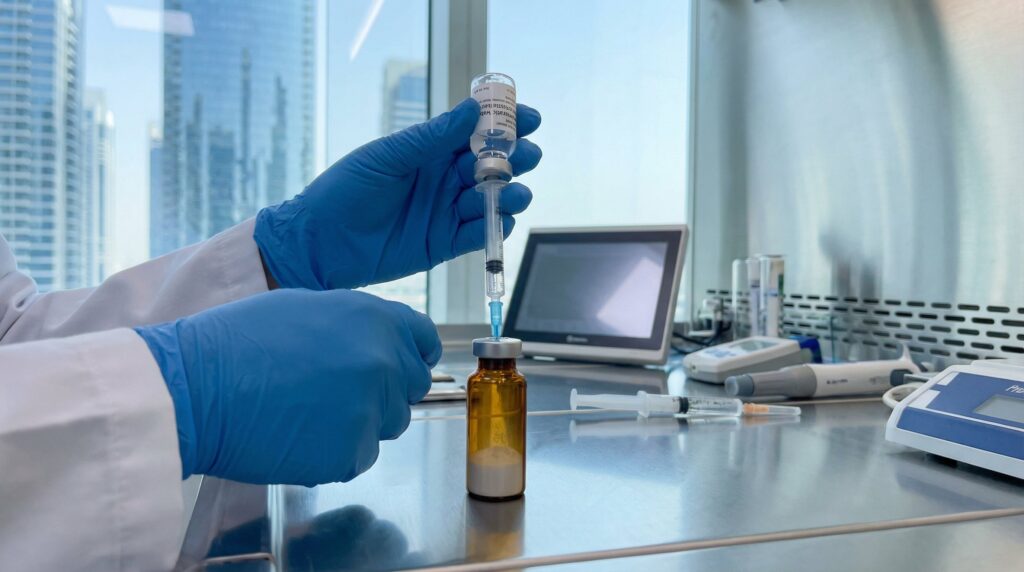
To safely reconstitute peptides, allow the lyophilized vial to reach room temperature naturally. Swab the stopper, then slowly inject bacteriostatic water so it runs down the interior glass wall. Never shake the vial; gently swirl it to dissolve the powder, preserving the fragile peptide chains.
The Science of Lyophilized Peptides and Proper Handling
High-quality research peptides are almost exclusively supplied as a freeze-dried, lyophilized powder. This process removes moisture under a vacuum, preventing premature degradation and allowing the compound to remain stable during transit. However, this stable state is highly sensitive to sudden environmental changes.
Before initiating any reconstitution protocol, the vial must transition safely from its cold storage environment to ambient temperature. If a cold vial is immediately exposed to humid Dubai air, condensation can form inside the glass. This excess moisture can compromise the compound’s structural integrity or even cause micro-cracks in the vial due to rapid thermal expansion. Researchers should allow the vial to sit in a climate-controlled room for 10 to 15 minutes prior to introducing any solvent.
Once the lyophilized powder is mixed with a liquid, the peptide’s molecular bonds become active—and highly vulnerable. The physical force of mixing must be managed carefully to avoid denaturing the long, fragile chains of amino acids.
Bacteriostatic Water vs. Sterile Water for Research
The choice of solvent is one of the most critical decisions in the reconstitution process. While both sterile water and bacteriostatic water appear identical, their chemical compositions dictate the operational lifespan of your research materials.
Bacteriostatic water is formulated with 0.9% benzyl alcohol. This precise addition acts as a preservative, actively inhibiting the growth of bacteria within the vial. For most laboratory applications, reconstituting with bacteriostatic water extends the viable shelf life of the mixed compound to 4 to 6 weeks when properly refrigerated. This 28-day safety window is particularly important in high-humidity GCC climates, where the risk of environmental contamination during repeated vial access is elevated.
Conversely, plain sterile water contains no preservatives. It is intended for immediate, single-use applications. If a peptide is reconstituted with sterile water, it typically degrades or becomes highly susceptible to bacterial contamination within 24 to 48 hours. For laboratories conducting ongoing analysis or longitudinal studies, bacteriostatic water is the undisputed standard.
Step-by-Step Guide for Reconstitution
Executing the reconstitution process correctly safeguards the 99%+ purity established by the manufacturer’s Certificate of Analysis (COA). Follow these precise laboratory steps:
- Prepare the Workspace: Ensure your bench is clean and well-lit. Gather the lyophilized peptide vial, bacteriostatic water, and a fresh U-100 syringe.
- Temperature Acclimation: Confirm both the solvent and the peptide vial have reached room temperature.
- Sterilize the Entry Points: Vigorously swab the rubber stoppers of both the bacteriostatic water and the peptide vial with an isopropyl alcohol wipe. Allow them to air dry completely.
- Draw the Solvent: Draw the calculated volume of bacteriostatic water into the syringe. To prevent pressure buildup in the solvent vial, inject an equivalent volume of air into the vial before drawing the liquid.
- Equalize Pressure: As you pierce the peptide vial, you may notice a vacuum effect pulling the plunger down. Allow this to happen naturally, but control the speed.
- The Slow Drip: Do not spray the solvent directly onto the delicate powder. Angle the syringe so the liquid runs slowly down the interior glass wall of the vial. This prevents foaming and protects the fragile amino acid bonds.
- Dissolve Gently: Once the solvent is transferred, remove the syringe. Never shake the vial. Instead, hold it between your thumb and index finger and swirl it in a gentle, rolling motion until the liquid is completely clear and no particulates remain.
Calculating Research Concentrations
Precision is paramount when preparing samples for in-vitro analysis. Researchers must calculate the correct microgram (mcg) per milliliter (mL) ratio to ensure accurate application. Standard laboratory protocols utilize U-100 syringes, where 1 unit equates to 10 microliters (0.01 mL).
The foundational formula for determining concentration is:
Concentration (mcg/mL) = (Vial Strength in mg × 1,000) ÷ Solvent Volume in mL
For example, if a researcher is working with a 5mg vial of a research compound and adds 2mL of bacteriostatic water:
- Convert mg to mcg: 5mg × 1,000 = 5,000mcg
- Divide by volume: 5,000mcg ÷ 2mL = 2,500mcg per mL
- Syringe translation: In a U-100 syringe, 10 units (0.1mL) would contain 250mcg of the compound.
Many procurement teams and researchers utilize digital peptide calculators to verify their manual math, ensuring exact concentrations before commencing their studies.
Navigating the UAE Landscape: Logistics, Customs, and Quality Checks
For procurement staff and informed buyers in Dubai and the wider GCC, sourcing high-purity materials involves navigating specific regulatory and logistical frameworks.
In the UAE, research peptides are categorized under customs classification 3504.00, designating them strictly for laboratory research use. This clear distinction separates them from clinical pharmaceuticals. When evaluating suppliers, it is crucial to verify that they understand and comply with these import classifications to avoid customs friction and ensure uninterrupted supply chains.
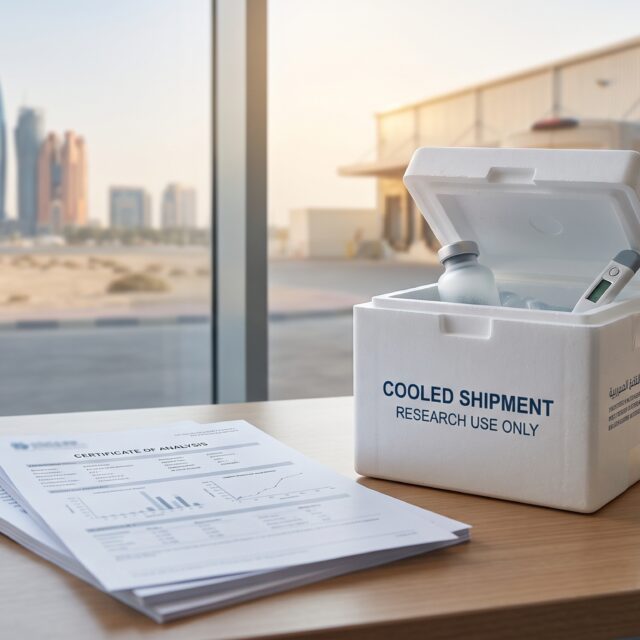
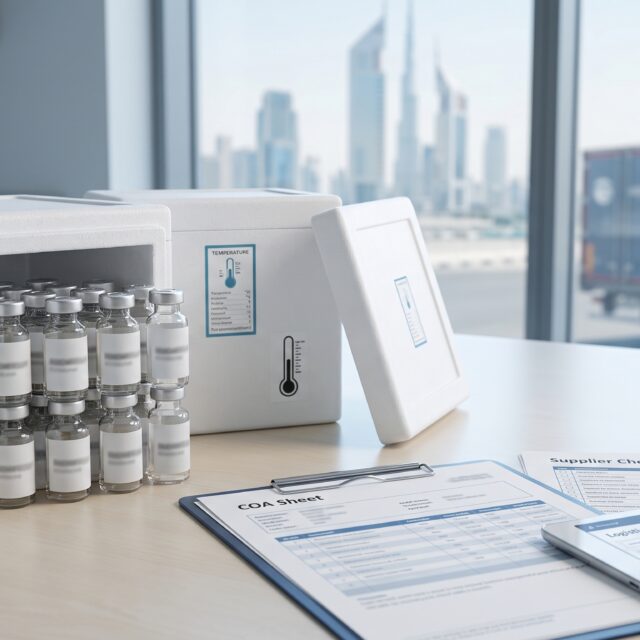
Furthermore, the extreme ambient temperatures of the UAE necessitate rigorous quality assurance. Before committing to a supplier, buyers must demand visibility of batch-specific Certificates of Analysis (COAs) backed by HPLC and mass spectrometry testing. These documents verify the 99%+ purity of the compound before it was freeze-dried.
NOVA Labs addresses these exact regional challenges. We provide complete COA transparency for every batch in our laboratory research peptide catalogue. To combat the risk of thermal degradation during transit, we manage local cold-chain logistics carefully, offering a highly reliable Dubai same-day delivery service for orders placed before our daily cutoff. With cash-on-delivery (COD) options and direct WhatsApp support, researchers can secure their inventory with confidence.
GCC Summer Storage Guide: Protecting Reconstituted Peptides
The moment a peptide is reconstituted, the clock begins ticking on its stability. The four enemies of peptide viability are heat, light, moisture, and agitation. In the GCC, ambient summer temperatures can rapidly destroy an active compound if left unmanaged.
Once mixed, vials must be immediately transferred to a dedicated refrigerator and stored at temperatures between 2°C and 8°C (36°F – 46°F). Crucially, reconstituted liquids must never be frozen. Freezing creates ice crystals that act like microscopic blades, severing the fragile molecular chains and rendering the compound useless for research.
Store all vials upright to minimize the surface area exposed to the rubber stopper, reducing the risk of degradation or contamination. Additionally, keep vials away from the refrigerator’s internal light source or store them in opaque, UV-resistant containers, as prolonged exposure to light accelerates chemical breakdown.
Procurement and Bottom Line
Understanding how to reconstitute peptides correctly is the foundation of reliable, reproducible laboratory research. From mastering the slow drip method to selecting bacteriostatic water over sterile alternatives, every step is designed to preserve the delicate structure of the lyophilized powder.
For researchers in Dubai, pairing proper reconstitution techniques with a supplier that guarantees COA-backed purity and temperature-controlled logistics is essential. By controlling the cold-chain from dispatch to the laboratory fridge, you eliminate the variables that compromise sensitive compounds.
To explore our full range of 99%+ purity, third-party tested materials, browse the NOVA Labs collection today and leverage our fast, local logistics network.
Disclaimer: The products mentioned in this article are strictly for in-vitro laboratory research purposes only and are not intended for human consumption or therapeutic use.
References
- United States Pharmacopeia (USP) <1> Injections and Implanted Drug Products (Guidelines for Bacteriostatic Water for Injection).
- World Customs Organization (WCO) Harmonized System (HS) Code 3504.00 for Peptones and their derivatives.
- Laboratory standards for peptide handling and lyophilized stability protocols in high-heat environments.
- Peptide Calculator | Free Reconstitution & Syringe Tool UAE | VaultLabs
- Usage Guide – Peptides Dubai
- Research Peptides Dubai – Wellness Labs
- Emirates Peptides: Buy Research Peptides in UAE
- Complete Guide to Research Peptide Reconstitution (2025) – BioInfinity Lab
- How to Store Peptides: Lyophilized vs Reconstituted, Shelf Life, and the Four Enemies of Peptide Stability – Perfect B Aesthetic Medicine
Frequently asked questions
Can I shake the vial to dissolve the peptide faster?
No. Shaking a reconstituted vial can cause foaming and severe structural damage to the fragile peptide chains. Always swirl the vial gently until the lyophilized powder is fully dissolved.
How long do reconstituted peptides last in the fridge?
When reconstituted with bacteriostatic water and stored properly in a refrigerator between 2°C and 8°C, most research compounds remain stable for 4 to 6 weeks.
What is the difference between sterile water and bacteriostatic water?
Bacteriostatic water contains 0.9% benzyl alcohol, which acts as a preservative to inhibit bacterial growth and extend shelf life up to 28 days. Sterile water lacks preservatives and is typically only stable for 24 to 48 hours after mixing.
Can I freeze peptides after mixing them?
No, you should never freeze a reconstituted liquid compound. Freezing creates ice crystals that can destroy the delicate amino acid bonds, ruining the material for laboratory research.
Why must the lyophilized vial reach room temperature before mixing?
Allowing the cold vial to reach room temperature prevents condensation from forming inside the glass when exposed to ambient air, which could introduce moisture and compromise the powder before the solvent is added.
Nova Labs buyer tools
Ready to verify stock, testing and delivery?
Use the product page and lab report section to check availability, documentation, delivery timing and support before placing an order.
- COA / test-report checks
- Dubai delivery context
- Cold-chain handling
- COD and card payment options
- WhatsApp support