




Cold Chain Peptide Delivery Abu Dhabi: Evaluating Logistics
Cold chain peptide delivery Abu Dhabi relies on specialized temperature-controlled packaging and rapid local fulfillment to protect research compounds from extreme UAE heat. By utilizing passive thermal insulation, phase-change materials, and next-day couriers, reliable suppliers prevent the rapid thermal degradation of fragile amino acid sequences during transit.
For procurement specialists and independent researchers in the GCC, the local climate presents an immediate risk to biological compounds. During peak summer months, Abu Dhabi’s ambient temperatures routinely exceed 45°C. Standard courier vehicles lacking climate control act like ovens, rapidly denaturing delicate research materials before they ever reach the laboratory bench.
Quick Answer: The Buyer’s Logistics Checklist
When evaluating cold chain logistics in the UAE, do not rely on assumptions. Standard shipping protocols are insufficient for biological research materials in the Middle East. Use this checklist to verify a supplier’s operational standards before securing your order:
- Local Warehousing: Does the supplier fulfill orders from within the UAE to entirely bypass international customs delays?
- Passive Packaging Systems: Do they deploy high-density insulated panels paired with specialized Phase Change Materials (PCMs) rather than standard, quick-melting water ice packs?
- Transit Time: Can they guarantee a 24- to 48-hour domestic turnaround?
- Batch-Matched COAs: Is there independent HPLC and Mass Spectrometry documentation proving the compound was 99%+ pure before it even entered transit?
- Payment Security: Do they offer Cash on Delivery (COD), allowing you to physically inspect the delivery timeline firsthand before payment?
- Responsive Local Support: Can you reach a local support team via WhatsApp or phone to coordinate precise delivery windows?
The Physics of Thermal Degradation in the UAE Climate
Peptides are precisely sequenced chains of amino acids held together by fragile peptide bonds. When exposed to excessive thermal stress, these bonds break down, directly compromising the structural integrity, molecular weight, and overall validity of the compound for in vitro testing.
The extreme heat of the Gulf region accelerates three primary mechanisms of molecular degradation:
1. Hydrolysis
Hydrolysis is the cleavage of peptide bonds by water molecules. While lyophilized (freeze-dried) peptides have minimal moisture content, any exposure to humidity combined with extreme heat will catalyze this reaction, fragmenting the peptide chain into useless constituent parts.
2. Oxidation
Oxidation involves the alteration of specific amino acid residues, most notably methionine, tryptophan, and histidine. When subjected to the high temperatures found in a non-refrigerated UAE delivery van (which can easily reach 55°C inside the cargo hold), oxidative degradation accelerates exponentially, altering the compound’s binding affinity in research models.
3. Deamidation
Deamidation is the breakdown of asparagine and glutamine residues into aspartic acid and glutamic acid. This process is highly temperature-dependent. A research compound sitting in a hot customs warehouse for four days will likely undergo significant deamidation, invalidating subsequent analytical test results.
While lyophilized powder is inherently more stable than reconstituted liquid solutions—often tolerating controlled room temperatures up to 25°C for brief periods—subjecting these vials to standard UAE ambient temperatures without specialized thermal protection will initiate immediate structural failure.
International Shipping Risks vs. UAE Local Fulfillment
A common and costly logistical misstep made by regional researchers is ordering critical laboratory supplies from international vendors offering “standard global shipping.” These logistical models are fundamentally incompatible with the physical realities of the UAE market.
International shipments must pass through complex, multi-stage customs checkpoints. A package containing specialized biological materials can easily be held in a non-climate-controlled customs holding area for days pending documentation inspection. By the time the package clears customs and is released to a local final-mile courier, the internal thermal packaging has long since failed, and the contents are thoroughly denatured.
Conversely, localized suppliers operate directly from domestic hubs. By fulfilling orders from within the country, local suppliers bypass border delays and import inspections entirely. They pack a verified lyophilized vial in a climate-controlled UAE facility, hand it directly to a specialized courier, and execute delivery swiftly. For researchers needing immediate, secure access, leveraging peptides UAE next day delivery ensures the critical thermal barrier remains entirely intact from the warehouse to your laboratory.
Passive Packaging Systems: Beyond the Standard Ice Pack
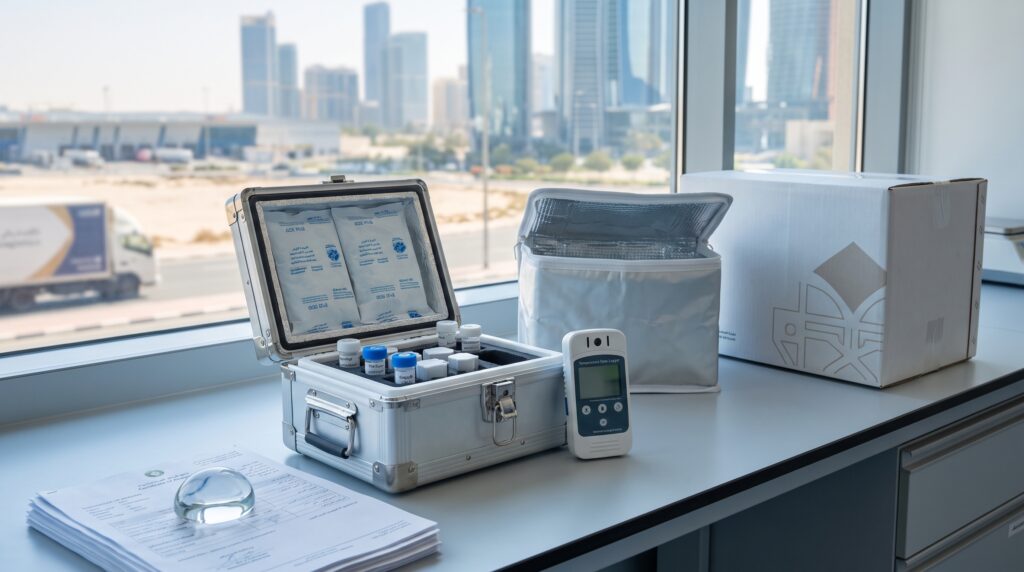
Reliable cold chain peptide delivery relies heavily on advanced passive packaging. Unlike active cold chain logistics (which rely on refrigerated vehicles requiring continuous power), passive packaging uses specialized, scientifically engineered materials to create an independent, long-lasting microclimate inside the shipping box.
High-Density Insulation
Advanced insulating materials, such as Vacuum Insulated Panels (VIPs) or high-density Expanded Polystyrene (EPS), block external heat transfer far more effectively than standard bubble wrap or thin cardboard. These materials dramatically slow the rate at which the UAE’s ambient heat penetrates the package.
Phase Change Materials (PCMs)
Unlike generic water-based ice packs that melt quickly and introduce dangerous condensation, PCMs are specifically engineered chemical compounds designed to absorb and release large amounts of thermal energy at targeted temperatures. When placed inside the insulated packaging, PCMs can maintain a strict temperature range (typically 2°C to 8°C) for up to 72 hours, easily covering the standard next-day local delivery window.
Shock-Proof Containment
Thermal control is useless if the glass vial shatters during transit. Premium suppliers suspend the vials in custom-molded, shock-absorbing inserts. This prevents physical agitation and protects the delicate lyophilized cake from fracturing, ensuring the compound arrives in pristine condition for reconstitution.
Batch-Matched Testing: The Pre-Requisite to Shipping
Even the most sophisticated, ultra-insulated logistics network is only as effective as the product it delivers. A robust cold chain ensures the compound retains its baseline purity, but buyers must first verify what that baseline purity actually is.
Before ordering, demand to see public, batch-specific Certificate of Analysis (COA) documents. These documents should feature high-resolution High-Performance Liquid Chromatography (HPLC) to verify purity levels (targeting >99%) and Mass Spectrometry (MS) to confirm the exact molecular weight of the sequence. If a supplier cannot prove the peptide was pure before it went into the thermal packaging, the quality of their cold chain delivery is irrelevant.
Payment Security and Local Support
When evaluating a supplier’s logistics, their payment and support structures often reflect their confidence in their operational capabilities. In the GCC, Cash on Delivery (COD) remains a vital trust indicator. Suppliers offering COD via trusted local courier networks guarantee that they are confident in their rapid local logistics, allowing the buyer peace of mind and the ability to track the exact timeline before money changes hands.
Furthermore, high-quality local suppliers provide accessible support networks. Whether confirming delivery windows via WhatsApp or clarifying COA details over email, responsive local support prevents missed deliveries—a critical factor when receiving temperature-sensitive items.
Secure Your Research Materials Today
Understanding the mechanics of cold chain peptide delivery in Abu Dhabi empowers researchers to make informed procurement decisions. By prioritizing local fulfillment, advanced passive thermal packaging, and transparent batch testing, you can eliminate the risks associated with thermal degradation and customs delays.
To source high-purity, structurally stable compounds backed by reliable, temperature-controlled UAE logistics, visit our shop and explore our catalog of verified research materials.
Disclaimer: The products mentioned in this article are strictly for in vitro research purposes only and are not intended for human consumption, diagnostic use, or therapeutic treatment.
References
- D’Hondt, M., et al. (2014). “Related impurities in peptide medicines.” Journal of Pharmaceutical and Biomedical Analysis, 101, 2-30.
- Kamberi, M., et al. (2004). “Stability of peptides in different storage conditions.” International Journal of Pharmaceutics, 285(1-2), 1-15.
- UAE Ministry of Health and Prevention (MOHAP) guidelines on Good Distribution Practice (GDP) for biological materials.
- Peptide Storage Temperature Abu Dhabi | Expert Buyer’s Guide – NOVA Labs
- Research Peptides Abu Dhabi – Wellness Labs
- Best Peptide Shop Abu Dhabi: What to Check Before Ordering – NOVA Labs
- From Manufacturer to End Customer: How AlGenome International Guarantees a Reliable Cold Chain for Your Critical Supplies
- Healthcare Logistics & Passive Packaging Abu Dhabi – Total Freight International
- Nova Biolabs vs Peptide Tech UAE: Which Peptide Shop Fits UA – NOVA Labs
- How Long Do Peptides Last at Room Temperature? Stability, Storage, and Degradation Guide
- Top 5 cold chain logistics hubs in the Middle East for pharmaceuticals and F&B
Frequently asked questions
Does cold chain peptide delivery in Abu Dhabi cost extra?
Premium domestic suppliers typically incorporate the cost of passive thermal packaging and specialized local couriers into their standard delivery fees. Expedited next-day or same-day options may carry a slight premium but ensure maximum stability.
Can lyophilized peptides survive standard shipping in the UAE?
While lyophilized (freeze-dried) peptides are highly stable at controlled room temperatures up to 25°C, standard UAE shipping in the summer exposes packages to 45°C+ heat. This level of extreme thermal stress can rapidly degrade even lyophilized compounds without proper insulation.
What happens if a peptide shipment gets stuck in UAE customs?
International shipments delayed in non-climate-controlled customs warehouses risk severe thermal degradation as their internal ice packs melt and ambient heat penetrates the box. Sourcing from a supplier with local UAE fulfillment bypasses this risk entirely.
How do I know my research peptides stayed cold during transit?
Reliable domestic suppliers utilize advanced Phase Change Materials (PCMs) and high-density insulated panels to guarantee a stable internal microclimate for 48-72 hours, easily covering the rapid 1-to-2 day local delivery timeframe.
How should I store research peptides upon delivery in Abu Dhabi?
Immediately upon receiving the delivery, researchers should transfer the lyophilized vials to a secure laboratory freezer set to -20°C for long-term storage, keeping them protected from direct light and moisture until ready for reconstitution.
Nova Labs buyer tools
Ready to verify stock, testing and delivery?
Use the product page and lab report section to check availability, documentation, delivery timing and support before placing an order.
- COA / test-report checks
- Abu Dhabi delivery context
- Cold-chain handling
- COD and card payment options
- WhatsApp support