
Securing high-purity research materials in the Middle East requires more than just finding a well-designed website. For researchers, institutional buyers, and procurement teams in the GCC, navigating local customs regulations and extreme environmental challenges adds several layers of complexity. When evaluating the best peptide shop kuwait, buyers must look beyond competitive pricing to verify rigorous analytical testing, climate-appropriate logistics, and transparent local support.
The search landscape in Kuwait often points buyers toward cosmetic skincare retailers or generic dietary supplements. However, modern analytical research demands laboratory-grade, lyophilized (freeze-dried) compounds. Sourcing these specialized items requires a supplier who understands the exact friction points of the region: from handling Ministry of Health (MOH) import restrictions to ensuring that fragile molecular structures survive transits in punishing summer temperatures that regularly exceed 50°C.
Quick Buyer Checklist: Finding the Best Peptide Shop Kuwait
Finding the best peptide shop in Kuwait requires verifying independent, third-party Certificates of Analysis (COAs), ensuring the supplier uses passive-cooling packaging to survive extreme Middle Eastern heat, and confirming precise Research Use Only documentation for seamless clearance through Kuwait Ministry of Health customs.
Navigating Kuwait Customs and Import Regulations
One of the most significant hurdles for laboratories and independent researchers in Kuwait is the importation process. The Kuwait Ministry of Health (MOH) and local customs authorities heavily regulate pharmaceutical and biological imports. While standard customs duties generally sit at around 5% for general imported items, specialized chemical or medical preparations require specific release orders if they are improperly declared or mistaken for consumer medications.
To avoid severe delays, confiscations, or friction at the border, a trusted supplier will ensure all logistics documentation is handled impeccably.
Key documentation requirements include:
- Clear Commercial Invoices: Invoices must accurately describe the chemical contents without making any therapeutic, cosmetic, or medical claims that would trigger a hold by health regulators.
- Research Use Only (RUO) Designation: Explicit, bold labeling confirming the materials are exclusively for laboratory, analytical, or in-vitro research.
- Harmonized System (HS) Codes: Correct tariff classification (often under specialized organic chemical categories) is vital to prevent automated customs flags at Kuwait International Airport or cross-border checkpoints.
Suppliers shipping globally from the US or China often fail to provide GCC-specific commercial paperwork, leading to packages sitting in uncontrolled, non-air-conditioned customs warehouses for weeks. Regional suppliers are vastly preferred because they understand exactly how to pre-clear or appropriately label these analytical compounds for the Kuwaiti market.
The Critical Role of Independent COA Verification
With the sheer volume of online vendors globally claiming “99% purity,” how does a researcher objectively verify these claims before allocating their procurement budget? A rigorous evaluation process begins with undeniable analytical proof.
HPLC and Mass Spectrometry (MS)
A Certificate of Analysis (COA) is the definitive proof of a compound’s identity and purity. However, a PDF generated by the supplier themselves—commonly known as “in-house testing”—holds very little scientific weight. You must look for independent, third-party laboratory testing.
The industry gold standard involves High-Performance Liquid Chromatography (HPLC) to verify the purity percentage. HPLC works by separating the components of a mixture to identify and quantify the exact concentration of the desired peptide while isolating any synthetic impurities or truncated sequences. Alongside this, Mass Spectrometry (MS) is used to measure the mass-to-charge ratio, confirming the exact molecular weight and identity of the compound.
Batch-Specific Tracking
Crucially, top-tier analytical testing labs provide a unique tracking or verification number on the COA. Researchers should be able to take that number, enter it into the third-party lab’s online database, and verify that the test results are genuine, unedited, and matched to the current batch being sold. If a supplier obfuscates the testing laboratory’s name or uses a COA dated three years ago, they fail the baseline standard for research procurement.
Protecting Purity: Environmental Logistics in the GCC
Kuwait’s environment is uniquely hostile to delicate organic compounds. If a peptide is exposed to these extremes in a liquid or improperly sealed state, the amino acid chains can degrade rapidly, fracturing the compound and rendering it useless for precise analytical or in-vitro study.
The Necessity of Lyophilization
High-tier suppliers only ship research peptides in a lyophilized (freeze-dried) state. This highly technical process removes moisture under a vacuum, locking the peptide into a stable, solid puck or powder. In this state, the compounds are remarkably resilient to temperature fluctuations during transit, provided they are kept out of direct UV sunlight and shielded from extreme, prolonged heat spikes.
Passive-Cooling and Regional Dispatch
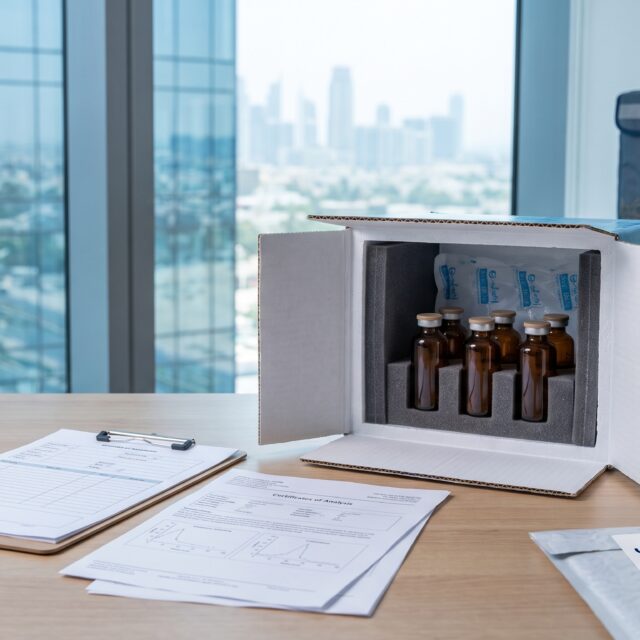
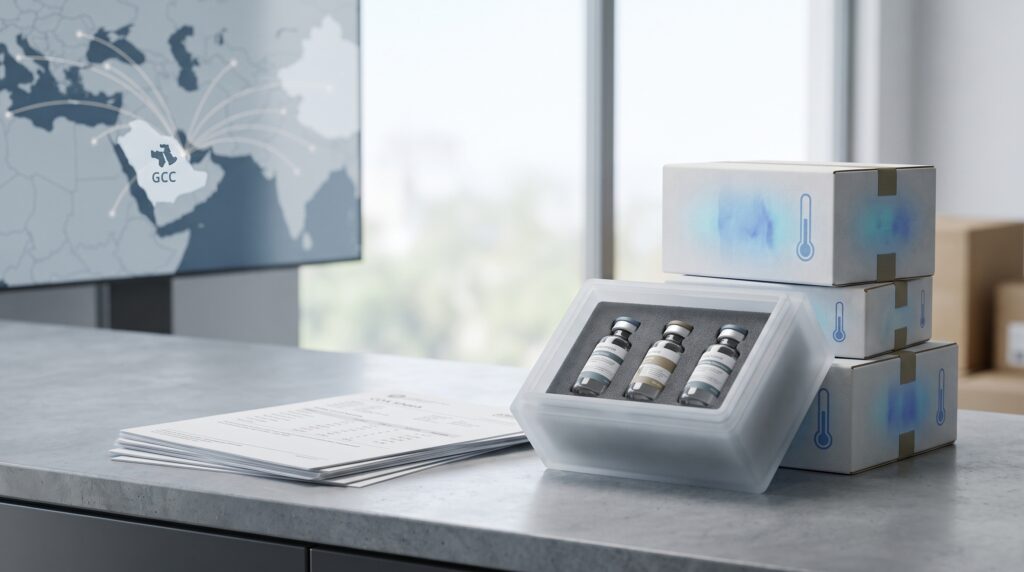
Even in a lyophilized state, high-end procurement standards dictate protective packaging. Evaluators should check if the supplier utilizes insulated mailers, thermal bubble wrap, or passive-cooling strategies to mitigate heat spikes during final-mile delivery.
When you rely on trans-Atlantic shipping, your package may sit on a sun-baked tarmac in a secondary transit hub for hours. Operating a localized supply chain changes the dynamic entirely. Just as domestic laboratories take advantage of peptides UAE next-day delivery protocols, neighboring researchers in Kuwait benefit from the same centralized GCC dispatch. This proximity means that sensitive lyophilized materials reach Kuwait City or Al Ahmadi in mere days rather than weeks, drastically reducing environmental exposure risks.
Secure Payment Gateways and Localized Support
Beyond logistics and purity, evaluating the operational legitimacy of a peptide shop requires looking at their infrastructure.
Regionally Integrated Payments
Payment security is a major indicator of a supplier’s regional integration. In Kuwait, KNET is the national debit network and the dominant online payment method, processing the vast majority of e-commerce transactions. While international peptide vendors might restrict buyers to cryptocurrency, unsecured wire transfers, or complicated offshore processing, a commercially optimized supplier catering to the GCC will offer robust, encrypted gateways that accept major credit cards and integrate smoothly with regional banking standards.
Real-Time Communication
When managing sensitive procurement timelines or planning a timed laboratory experiment, automated email responses are insufficient. The best suppliers offer direct, real-time communication channels, such as business WhatsApp support, to handle inquiries regarding batch numbers, exact stock availability, and delivery updates. If a supplier cannot quickly confirm whether a specific compound is in stock or provide the latest COA via chat, they likely operate as a drop-shipper rather than managing a dedicated, climate-controlled local facility.
Why Dubai is the Optimal Logistics Hub for Kuwait
Because Kuwait lacks specialized physical synthesizers and large-scale distribution centers for high-purity research materials, researchers frequently search for the “best peptide shop near me kuwait.” In reality, the most reliable proximity is found by looking to Dubai.
Dubai serves as the primary logistics, commercial, and distribution hub for the entire Middle East. By operating out of the UAE, NOVA Labs bridges the gap between strict international quality standards and local GCC realities. Researchers in Kuwait benefit from:
- Shorter Transit Times: Eliminating the multi-week delays and unpredictable customs holds associated with US or European shipping.
- Climate-Controlled Warehousing: Stock is held in strictly regulated cold-chain facilities right up until the exact moment of dispatch.
- GCC Customs Expertise: Paperwork is perfectly tailored for inter-GCC transit, minimizing friction with local health and trade ministries.
Conclusion: Making an Informed Procurement Decision
Securing the best peptide shop in Kuwait is ultimately an exercise in risk mitigation. Do not settle for unverified purity claims or vendors who ignore the logistical realities of the Middle Eastern climate. Always demand verifiable third-party COAs featuring HPLC and MS data, insist on lyophilized shipping with thermal protection, and prioritize regional suppliers who understand the specific documentation required by the Kuwait Ministry of Health.
For laboratories, independent researchers, and analytical buyers looking to source verified, stable compounds without the typical cross-border headaches, reviewing a dedicated regional catalogue is the most efficient next step. You can securely browse the available research peptides collection to review current batch data, independent analytical reports, and detailed product specifications tailored specifically for GCC research delivery.
Disclaimer: The products and information mentioned in this article are provided strictly for in-vitro laboratory research purposes only. They are not intended for human consumption, therapeutic use, or medical treatment.
References
- International Trade Administration: Kuwait Import Requirements and Documentation.
- Checkout.com: Accept KNET – Kuwait’s leading payment method.
- Regional Logistics & Cold-Chain Standards for Laboratory Materials (GCC).
- Kuwait – Import Requirements and Documentation – International Trade Administration
- Accept KNET – Kuwait’s leading payment method – Checkout.com
- New decisions issued in Kuwait under the Ministry of Health – HFW
- Peptide Store Kuwait: What to Check Before Ordering – NOVA Labs
Frequently asked questions
How do I find the best peptide shop in Kuwait?
To find a reliable supplier in Kuwait, verify that they provide independent third-party COAs featuring HPLC and MS data, use passive-cooling transit for high-temperature climates, and ship products in a stable, lyophilized state.
Can research peptides clear Kuwait Ministry of Health customs?
Yes, provided the shipment includes precise documentation labeling the contents strictly as 'Research Use Only' alongside accurate commercial invoices and correct Harmonized System (HS) codes to prevent misclassification as medical products.
Why is cold-chain shipping necessary for peptides in the GCC?
Kuwait's summer temperatures frequently exceed 50°C, which can rapidly degrade fragile molecular structures. Peptides must be freeze-dried (lyophilized) and insulated during transit to maintain analytical stability for laboratory research.
Is it better to order peptides from international or regional suppliers?
Regional suppliers based in hubs like Dubai are generally safer for Kuwait buyers. They offer much faster inter-GCC transit times (typically 2-5 days), significantly reducing the risk of heat exposure and extensive customs delays compared to overseas vendors.
How can I verify a peptide COA?
A genuine Certificate of Analysis (COA) from a reputable third-party lab will include a unique tracking or verification number. You can enter this number directly into the testing laboratory's online database to confirm the purity results are authentic and match your batch.
Nova Labs buyer tools
Ready to verify stock, testing and delivery?
Use the product page and lab report section to check availability, documentation, delivery timing and support before placing an order.
- COA / test-report checks
- Kuwait delivery context
- Cold-chain handling
- COD and card payment options
- WhatsApp support