

The BPC-157 Dubai Buyer’s Checklist
Quick Answer: To safely buy BPC-157 in Dubai, researchers must prioritize local suppliers who provide batch-specific COAs confirming >99% purity via HPLC and Mass Spectrometry. Choosing UAE-based stock ensures cold-chain integrity, avoids international customs seizures, and allows for rapid, same-day delivery to your laboratory.
Navigating the peptide procurement landscape in the UAE requires strict attention to quality control. With growing interest in BPC-157 for in-vitro modeling, identifying a trustworthy source involves far more than simply finding a website with a checkout button. The integrity of your research depends entirely on the structural stability and purity of the peptide you source.
This comprehensive guide breaks down exactly what laboratory buyers need to know before placing an order. From understanding the nuances of batch-specific documentation to navigating the realities of GCC logistics, we explore how to confidently secure premium research materials locally.
Understanding BPC-157 in a Research Context
BPC-157 (Body Protection Compound-157) is a synthetic pentadecapeptide consisting of 15 amino acids, derived from a protective protein naturally found in human gastric juice. In laboratory environments, this peptide is extensively studied for its unique stability profile and its interaction with various cellular pathways, particularly those related to angiogenesis and tissue regeneration modeling.
Unlike many other peptides that rapidly degrade in acidic environments, BPC-157 has demonstrated remarkable structural resilience across diverse pH ranges during in-vitro studies. This stability makes it a subject of significant interest in research focusing on cellular cytoprotection.
For buyers in the UAE, the primary concern is ensuring the compound arriving at the laboratory bench perfectly matches the theoretical model. This requires rigorous quality control, elimination of heavy metal contaminants during synthesis, and an unwavering commitment to proper handling by your supplier.
Verifying Purity: How to Read a COA
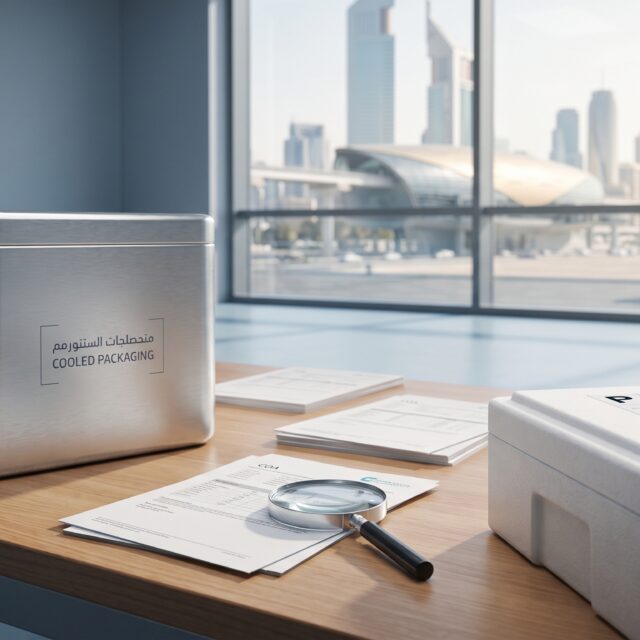
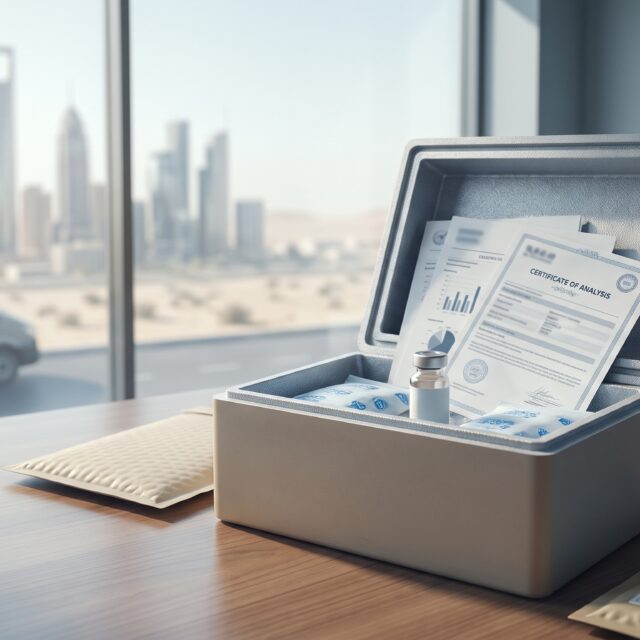
The single most critical document when evaluating a source is the Certificate of Analysis (COA). A COA is a verified report from an analytical laboratory detailing the exact composition and purity of the peptide batch.
Without a valid, batch-specific COA, researchers are operating entirely on blind trust. The synthetic peptide industry is largely unregulated, making independent verification non-negotiable. Here is what informed buyers must look for when verifying testing documentation:
High-Performance Liquid Chromatography (HPLC)
HPLC is the standard analytical technique used to separate, identify, and quantify each component in a mixture. On a COA, you should see an HPLC chromatogram showing a clear baseline and distinct peaks. The primary peak represents the target BPC-157 peptide. The area under this peak, relative to any secondary peaks (which represent impurities or truncated sequences), determines the purity percentage.
For rigorous research applications, a purity of >99% is the benchmark. Anything less can introduce uncontrolled variables into your assays. Buyers should also inspect the baseline of the chromatogram; a “noisy” or jagged baseline can sometimes indicate poor separation or underlying contamination.
Mass Spectrometry (MS)
While HPLC confirms purity, Mass Spectrometry confirms the identity of the molecule by measuring the mass-to-charge ratio of ions. BPC-157 has a specific theoretical molecular weight of 1419.5 g/mol.
The MS report must show a dominant peak aligning with this exact molecular weight. Look for the [M+H]+ ion peak (often around 1420.5) or doubly charged ions [M+2H]2+ (around 710.8), proving that the substance in the vial is definitively BPC-157 and not a structurally similar analogue or completely different compound.
Batch Alignment and Testing Dates
A common red flag in peptide procurement is the recycling of old, generic COAs. Always ensure that the batch number on the physical vial matches the batch number on the provided documentation. Additionally, check the date of the test to ensure it reflects recent stock rather than an analysis performed on a batch manufactured years ago.
Logistics: Protecting Peptide Integrity in the UAE Heat
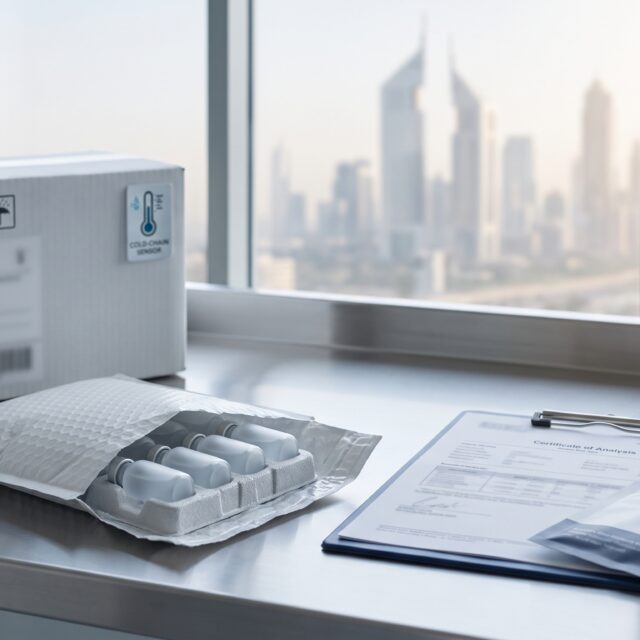
The ambient climate in the GCC presents a unique challenge for peptide logistics. During the summer months, tarmac temperatures at international shipping hubs like DXB or AUH can easily exceed 50°C. Prolonged exposure to extreme heat can lead to peptide degradation, rendering the compound useless for precise laboratory applications.
The Risks of International Dropshipping
When ordering materials from overseas suppliers, parcels are subject to complex international shipping routes. Even if the peptide is lyophilized (freeze-dried) and stable at room temperature, sitting in a hot customs warehouse for several days exposes it to severe thermal cycling.
Furthermore, importing peptides independently often requires specific commercial licenses or clearances. For independent researchers or private labs, this leads to frequent customs seizures, unexpected import duties, and lengthy delays that disrupt project timelines.
The Advantage of Local Stock and Cold-Chain Handling
Sourcing from a local UAE supplier mitigates these risks entirely. Peptides stored locally in climate-controlled facilities and dispatched directly to your location bypass international transit friction and customs bottlenecks.
For the final leg of delivery within the UAE, speed is paramount. Utilizing services like same-day peptide delivery in Dubai ensures that materials transition from climate-controlled storage to your lab bench in a matter of hours, not weeks. Local couriers familiar with Dubai’s infrastructure ensure packages are not left unattended in high temperatures.
Laboratory Handling and Reconstitution Protocols
Once you have successfully procured BPC-157 in Dubai, proper laboratory handling is critical to maintaining its >99% purity.
Storage Before Reconstitution
Lyophilized BPC-157 arrives as a solid, freeze-dried puck or powder inside a sealed vial. While it can survive short transit times at ambient temperatures, it should be immediately transferred to a freezer upon arrival. For long-term storage (several months to years), keep the lyophilized vials at -20°C. Avoid repeated freeze-thaw cycles.
In-Vitro Reconstitution Best Practices
When preparing BPC-157 for in-vitro assays, the peptide must be reconstituted using an appropriate sterile solvent, typically bacteriostatic water (which contains 0.9% benzyl alcohol to prevent bacterial growth) or sterile saline, depending on the specific cellular model being used.
- Allow the lyophilized vial to reach room temperature before opening to prevent condensation from forming inside the vial.
- Swab the stopper with isopropyl alcohol.
- Gently introduce the solvent, allowing it to flow down the side of the glass rather than injecting it directly into the delicate peptide powder.
- Swirl the vial gently until the solution is completely clear. Do not shake vigorously, as mechanical stress can damage the peptide bonds.
- Once reconstituted, the solution must be stored in a refrigerator (2°C to 8°C) and utilized within its documented stability window (typically 20 to 30 days).
Purchasing Considerations: Payment and Support
Beyond purity and logistics, the operational reliability of a supplier is a major factor for UAE buyers, particularly those managing tight grant budgets or urgent project deadlines.
Payment Flexibility and Trust
Flexible, secure payment options are a strong indicator of a supplier’s operational maturity. Cash on Delivery (COD) is heavily favored in the UAE market, allowing buyers to inspect the physical package and verify batch numbers before handing over funds. Secure credit card processing and cryptocurrency options also provide necessary flexibility for institutional, international, or privacy-conscious buyers.
Accessible Local Support
Responsive customer support is vital when coordinating deliveries to secure laboratory facilities, universities, or residential complexes in Dubai. Suppliers offering direct WhatsApp support provide real-time updates, can quickly answer technical questions regarding batch COAs, and easily accommodate specific delivery timeframes or courier instructions.
Choosing NOVA Labs for BPC-157 Procurement
At NOVA Labs, we understand the exacting standards required by the UAE research community. We have built our operational model specifically to address the unique friction points of sourcing high-purity peptides in the GCC region.
When you source your research materials from us, you are guaranteed:
- Verified Analytical Purity: Every batch is subjected to rigorous third-party HPLC and MS testing. We provide transparent, easy access to our COAs, ensuring you know exactly what is in the vial before you begin your assays.
- Local UAE Stock: Our entire inventory is securely held in Dubai under strictly monitored, climate-controlled conditions. You never have to worry about international customs delays, import taxes, or tarmac heat exposure.
- Rapid Logistics: We offer seamless, fast delivery across the Emirates, prioritizing the stability of your research materials from our facility to your bench.
For researchers ready to procure premium materials, you can directly secure our meticulously tested BPC-157 vial through our secure portal.
Conclusion: Making an Informed Decision
Securing BPC-157 in Dubai requires a highly strategic approach to laboratory procurement. By prioritizing suppliers who provide verifiable third-party COAs, maintain local climate-controlled stock, and offer transparent communication, buyers can protect the integrity of their research data. Avoid the severe risks of overseas shipping and thermal degradation by partnering with established local experts who understand the nuances of peptide handling in the GCC.
Ready to source high-purity peptides for your next in-vitro project? Explore our full catalog and experience the reliability of domestic UAE shipping today.
References
- Sikiric, P., et al. (2011). “Toxicity by NSAIDs. Counteraction by BPC 157.” Journal of Physiology and Pharmacology, 62(1), 61-70. Available at: https://pubmed.ncbi.nlm.nih.gov/21595133/
- Cox, H. D., et al. (2017). “Detection of the peptidic drug BPC 157 in urine.” Drug Testing and Analysis, 9(10), 1490-1495. Available at: https://pubmed.ncbi.nlm.nih.gov/28226458/
- Gwyer, D., et al. (2019). “Gastric pentadecapeptide body protection compound BPC 157 and its role in accelerating musculoskeletal soft tissue healing.” Cell and Tissue Research, 377(2), 153-159. Available at: https://pubmed.ncbi.nlm.nih.gov/30915550/
Disclaimer: The products mentioned in this article are provided strictly for in-vitro research and laboratory analytical purposes only. They are not approved for human consumption, diagnostic, therapeutic, or clinical use. NOVA Labs policies strictly prohibit the use of these compounds for unapproved purposes.
Disclaimer: The products mentioned in this article are for research purposes only and are not intended for human consumption.
Frequently asked questions
Is it legal to buy BPC-157 in Dubai?
Yes, purchasing BPC-157 in Dubai is permitted strictly for laboratory research and analytical purposes. It is not approved, licensed, or sold as a medication, dietary supplement, or for any form of human consumption.
How can I verify the purity of BPC-157 before buying?
Researchers should request a batch-specific Certificate of Analysis (COA) from their supplier. A valid COA must include High-Performance Liquid Chromatography (HPLC) and Mass Spectrometry (MS) testing to confirm the peptide's exact identity and demonstrate a purity level of >99%.
Does shipping in the UAE heat damage BPC-157?
Prolonged exposure to extreme heat can degrade peptides over time. While lyophilized (freeze-dried) BPC-157 offers short-term stability, sourcing from a local Dubai supplier with climate-controlled storage and rapid same-day delivery eliminates the risk of heat damage associated with lengthy international shipping.
What is the best way to store BPC-157 after delivery?
Upon receiving lyophilized BPC-157, the vials should be stored in a freezer (optimally at -20°C) for long-term stability. Once reconstituted for active research protocols, the vial must be kept refrigerated between 2°C and 8°C and utilized within its recommended stability window.
Do suppliers in Dubai offer Cash on Delivery for peptides?
Yes, established local research material suppliers like NOVA Labs offer Cash on Delivery (COD) across the UAE, providing buyers the security of receiving and inspecting their orders before completing payment.
Nova Labs buyer tools
Ready to verify stock, testing and delivery?
Use the product page and lab report section to check availability, documentation, delivery timing and support before placing an order.
- COA / test-report checks
- Dubai delivery context
- Cold-chain handling
- COD and card payment options
- WhatsApp support