

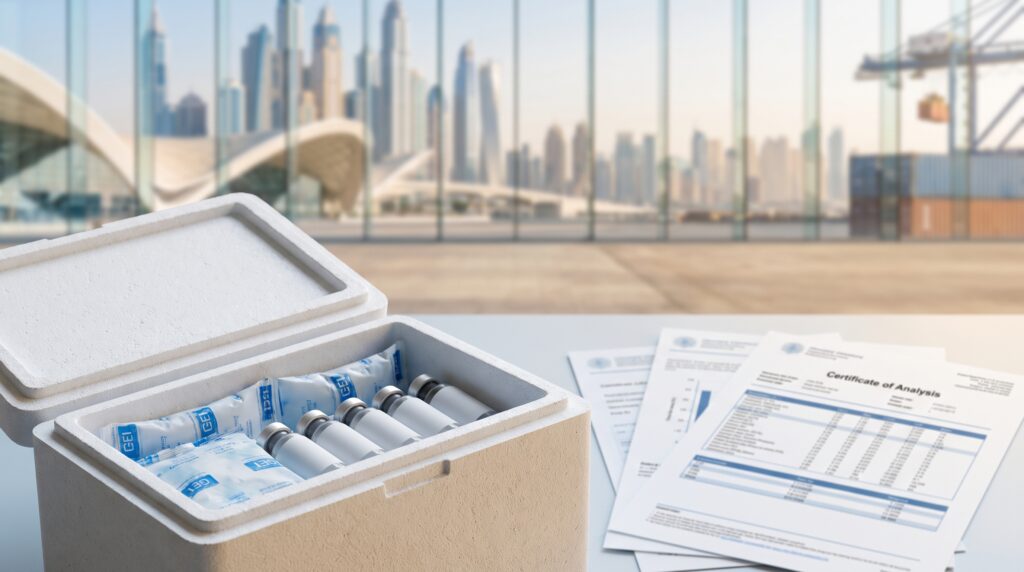
Sourcing HPLC Tested Peptides GCC: The Core Challenge
Quick Answer: To verify HPLC tested peptides in the GCC, researchers must review third-party Certificates of Analysis (COAs) for a minimum 98% purity via HPLC and confirm molecular identity using Mass Spectrometry (MS). Sourcing locally within the UAE prevents extreme heat degradation during long international transits, preserving critical compound stability.
Procuring high-quality research reagents in the Gulf region differs heavily from buying in North America or Europe. Buyers in the UAE, Saudi Arabia, Kuwait, Bahrain, Qatar, and Oman must evaluate a complex set of regional variables. The intense summer climate, frequently pushing desert logistics temperatures above 45°C, introduces severe risks of molecular degradation during transit. Simultaneously, the online market has seen an influx of low-trust vendors who use generic documentation or rely on social media channels rather than established scientific supply chains.
For any laboratory or independent researcher, the financial and temporal cost of a failed experiment due to degraded or impure compounds is significant. Relying on marketing claims is insufficient. True verification requires auditing analytical testing data. By learning how to read a supplier’s Certificate of Analysis (COA), buyers can confidently distinguish professional vendors from opportunistic sellers.
Why HPLC and MS Data Are Non-Negotiable
When evaluating any HPLC tested peptides supplier GCC, recognize that HPLC alone does not tell the full story. A comprehensive testing protocol requires two distinct analytical methods working in tandem.
High-Performance Liquid Chromatography (HPLC) is the gold standard for separating and quantifying the purity of a peptide. This process pushes a liquid solvent containing the sample through a column filled with solid adsorbent material. Each component in the sample interacts slightly differently with the adsorbent material, causing different flow rates and separating the components as they flow out the column. A UV detector then measures the absorbance of these separated components. This quantifies the percentage of the target peptide relative to other UV-absorbing materials, such as truncated sequences, synthesis byproducts, or impurities. In a professional research setting, a minimum purity threshold of 98% is the baseline standard for in vitro testing.
However, purity does not confirm identity. Mass Spectrometry (MS) is required to confirm the exact molecular weight of the substance. Using techniques like Electrospray Ionization (ESI), MS measures the mass-to-charge ratio of ions. If the MS data matches the known sequence weight of the target peptide, the researcher can be certain the correct compound is present. Without MS, an HPLC test could simply be proving that a vial contains 99% of a completely incorrect substance.
How to Verify a Peptide COA: The Buyer Checklist
Identifying a trustworthy HPLC tested peptides shop GCC begins with the Certificate of Analysis (COA). Fraudulent, photoshopped, or generic COAs are a known industry issue. Subject every testing document to a strict verification checklist before authorizing a purchase:
1. Batch and Lot Numbers: A legitimate COA features a unique, batch-specific lot number that precisely matches the label on the physical vial you receive. If a supplier provides a COA without a lot number, or if the number does not match your physical inventory, the test cannot be accurately linked to your materials.
2. Testing Date and Shelf Life: Peptide stability has a defined shelf life, even when properly stored. The COA should reflect recent testing. Documentation that is several years old may no longer accurately represent current stock, especially if the compounds have been subjected to fluctuating storage temperatures during facility transfers.
3. Independent Analytical Laboratory: Trustworthy suppliers use independent, third-party testing facilities rather than relying solely on in-house testing, which presents a conflict of interest. Reputable independent labs (such as Janoshik Analytical or MZ Biolabs) often host the results on their own servers. This allows buyers to verify the document’s authenticity using a unique task ID or secure link provided on the certificate.
4. Unmanipulated Chromatogram Trace: A genuine COA includes a clear, unmanipulated HPLC chromatogram trace—a visual graph showing the peaks of the compound—rather than just a typed numeric claim. The primary peak should be sharp and distinct. You can review examples of properly structured testing documentation on the NOVA Labs Lab Results page to understand what legitimate chromatograms look like.
GCC Logistics: Beating the 45°C Heat Threat
The climate in the GCC presents a unique challenge for peptide stability that researchers in temperate climates do not face. Most research peptides are shipped in a lyophilized (freeze-dried) state. While lyophilization provides significant stability compared to liquid formulations, prolonged exposure to excessive heat still causes molecular degradation. Heat stress can lead to deamidation, oxidation, or hydrolysis, rendering the compound useless for precise laboratory applications.
When ordering from international suppliers based in the US, UK, or EU, transit times frequently exceed 15 days due to customs clearances. Packages often sit in unconditioned, tarmac-adjacent customs warehouses where ambient temperatures soar above 45°C (113°F) during the Gulf summer. This thermal stress is the primary reason internationally sourced reagents often yield inconsistent, degraded experimental results upon arrival in Dubai, Riyadh, or Doha.
Sourcing HPLC tested peptides in GCC through regional hubs mitigates this risk entirely. A supplier operating locally, such as from a UAE-based dispatch center, reduces transit times from weeks to just 48-72 hours. Local suppliers implement proper cold-chain handling protocols and climate-controlled storage up to the precise moment of last-mile dispatch, ensuring the lyophilized powder remains intact and stable.
Navigating Local Constraints: Customs and Payments
Importing research chemicals into the GCC involves navigating strict and continuously evolving customs regulations. The UAE’s implementation of the Emirates Drug Establishment (EDE) guidelines, Saudi Arabia’s SFDA import protocols, and Oman’s Bayan customs system all require precise, accurate documentation for laboratory chemicals.
International shipments lacking accurate Research Use Only (RUO) labeling, proper Harmonized System (HS) codes, or comprehensive Material Safety Data Sheets (MSDS) are frequently delayed, heavily taxed, or destroyed at the border. A local supplier who understands these regulatory frameworks ensures that all inventory is already cleared, duty-paid, and compliant, shielding the end-buyer from import friction and legal delays.
Furthermore, regional procurement expectations differ from Western markets. High-quality GCC suppliers recognize the local preference for direct, secure communication. They often provide customer support, batch inquiries, and stock verification directly via WhatsApp, avoiding the sluggish delays of traditional email ticketing. Payment gateways are also localized, often accepting secure local credit card processing or cryptocurrency for added privacy and efficiency, bypassing the international wire transfer hurdles common with overseas vendors.
Choosing a Reliable Supplier for Your Lab
When evaluating a supplier for your research, look for transparent operations that align with the rigorous demands of laboratory science. Be highly cautious of vendors operating exclusively through social media, Telegram groups, or classified ads, as these platforms are frequently used to distribute low-quality, untested, or counterfeit materials.
A reliable supplier will offer full transparency regarding testing protocols. They will display COAs prominently, provide verifiable links to third-party testing facilities, and clearly articulate their shipping and handling procedures to protect the compounds.
If you are ready to source high-purity, independently tested research reagents backed by verifiable analytical data and reliable local delivery, explore the comprehensive catalog at the NOVA Labs Shop.
*
Disclaimer: All products and compounds mentioned in this article are intended strictly for in vitro laboratory research purposes only. They are not for human consumption, animal testing, diagnostic, therapeutic, or clinical use. Always adhere to standard laboratory safety protocols and local GCC regulations when handling research chemicals.
References
- D’Hondt, M., et al. (2014). “Related impurities in peptide medicines.” Journal of Chromatography A, 1360, 296-310.
- Janoshik Analytical. (2023). “Understanding HPLC and MS in Peptide Quality Control.”
- United Arab Emirates Ministry of Health and Prevention (MOHAP). (2023). “Guidelines for the Importation of Research and Laboratory Reagents.”
- Kálmán, F., et al. (2007). “Stability of freeze-dried peptides.” European Journal of Pharmaceutics and Biopharmaceutics.
- The Ultimate Guide to HPLC Testing for Peptides – Vanguard Laboratory
- HPLC Tested Peptides GCC: The Complete COA & Purity Checklis – NOVA Labs
- Peptide Certificates of Analysis: How to Read and Verify a COA (2026 Guide) | Peptidepedia
- How To Read A Peptide COA | Muscle And Brawn
- Peptides Lab GCC – High-Purity Research Peptides | GCC Supply for Laboratories
- Terms & Conditions – SequenceLabs
- Research Peptides Oman: What to Check Before Ordering – NOVA Labs
- Peptides Online Kuwait: What to Check Before Ordering in the GCC – NOVA Labs
Frequently asked questions
What is HPLC testing for research peptides?
HPLC (High-Performance Liquid Chromatography) is an analytical method used to separate and measure the purity of a peptide. It determines the percentage of the target compound relative to any synthesis byproducts, truncated sequences, or impurities.
Why is Mass Spectrometry (MS) required alongside HPLC?
While HPLC confirms the purity of the material in the vial, Mass Spectrometry confirms its sequence identity by measuring the exact molecular weight. This ensures the correct molecular compound was synthesized and provided.
How can I verify a peptide COA is authentic?
Check that the COA features a unique batch number matching your specific vial, a recent testing date, the name of a reputable independent analytical laboratory, and an unmanipulated chromatogram graph rather than just a typed percentage.
Why is local GCC shipping important for peptides?
International shipping can take over 15 days, exposing sensitive lyophilized compounds to extreme GCC summer heat (up to 45°C) in customs warehouses, which risks degradation. Local shipping ensures delivery within 48-72 hours, preserving the compound's structural stability.!
Nova Labs buyer tools
Ready to verify stock, testing and delivery?
Use the product page and lab report section to check availability, documentation, delivery timing and support before placing an order.
- COA / test-report checks
- GCC delivery context
- Cold-chain handling
- COD and card payment options
- WhatsApp support