
The GCC Research Boom and the Rise of Counterfeits
To spot fake peptides in the UAE, buyers must demand a third-party Certificate of Analysis (COA) showing HPLC/MS testing with purity above 98%. Ensure the batch number on the vial matches the lab report, avoid Telegram sellers requesting unsecured payments, and verify the supplier uses temperature-controlled local logistics.
With the surge in demand for research compounds across the GCC—fueled by expanding hubs like Dubai Science Park and Abu Dhabi’s growing laboratory infrastructure—the region has inevitably attracted counterfeiters. From metabolic research peptides to tissue-repair compounds studied in in vitro settings, procurement teams and independent researchers frequently encounter illegitimate products. The UAE Ministry of Health and Prevention (MoHAP) and Department of Health (DoH) regularly issue warnings regarding counterfeit pens and unregulated black-market vials that contain unsterile compounds or dangerous chemical substitutes.
Navigating this landscape safely requires looking past flashy social media marketing and rigorously evaluating a supplier’s operational transparency. Authentic research requires authentic materials. Whether you are stocking a corporate laboratory or procuring vials for independent academic study, verifying chemical identity, purity, and proper handling is non-negotiable.
Quick Buyer Checklist: How to Spot Fake Peptides in the UAE
Before initiating an order or trusting a new supplier, run their operation through this primary evaluation checklist. If a vendor fails any of these criteria, consider it a critical red flag:
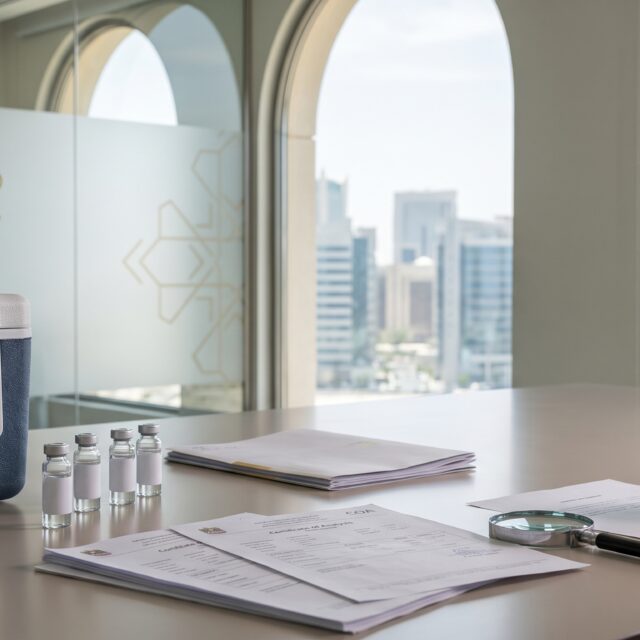
- Third-Party Testing: Does the supplier provide a verifiable, third-party Certificate of Analysis (COA) for the specific batch you are buying?
- Analytical Rigor: Does the COA include both High-Performance Liquid Chromatography (HPLC) for purity and Mass Spectrometry (MS) for molecular identity?
- Batch Matching: Is the batch number printed on the vial identical to the batch number on the laboratory report?
- Physical Integrity: Does the lyophilized powder look like a uniform “puck” or solid block, indicating professional freeze-drying and proper vacuum sealing?
- Payment Security: Are they asking for unsecured peer-to-peer payments via Telegram or WhatsApp (e.g., cryptocurrency, Western Union) without a standard corporate checkout gateway?
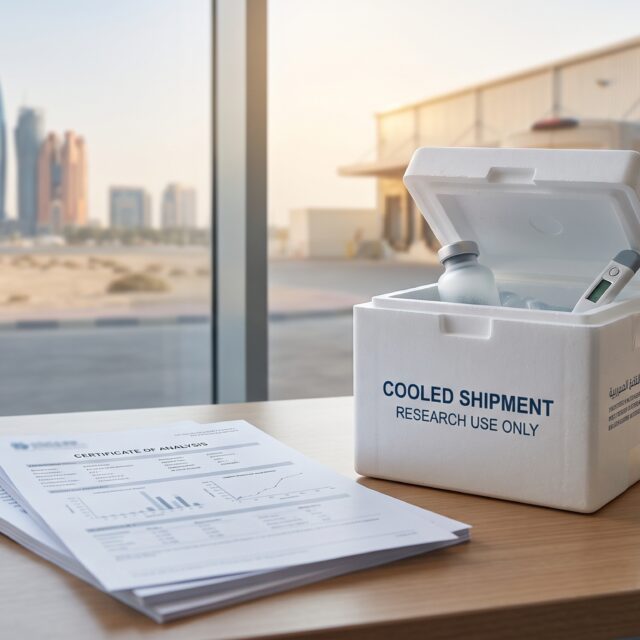
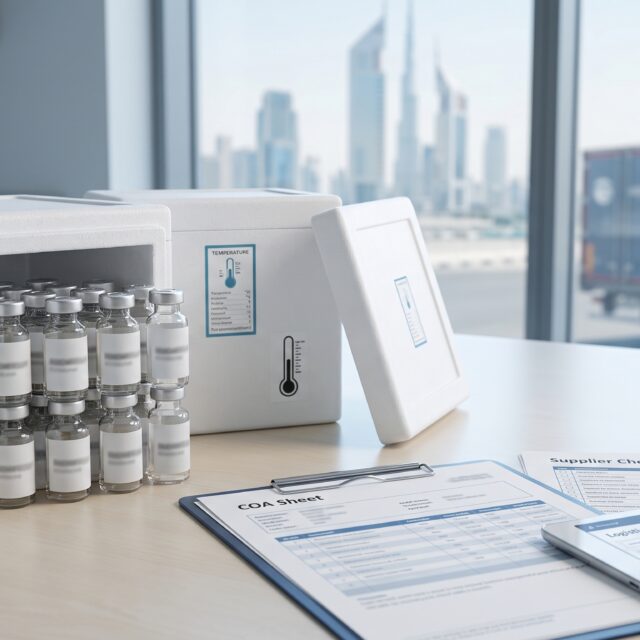
- Logistics and Climate Control: Do they dispatch from within the UAE using cold-chain logistics, or are they shipping internationally without temperature controls?
Red Flag #1: Missing or Doctored Certificates of Analysis (COAs)
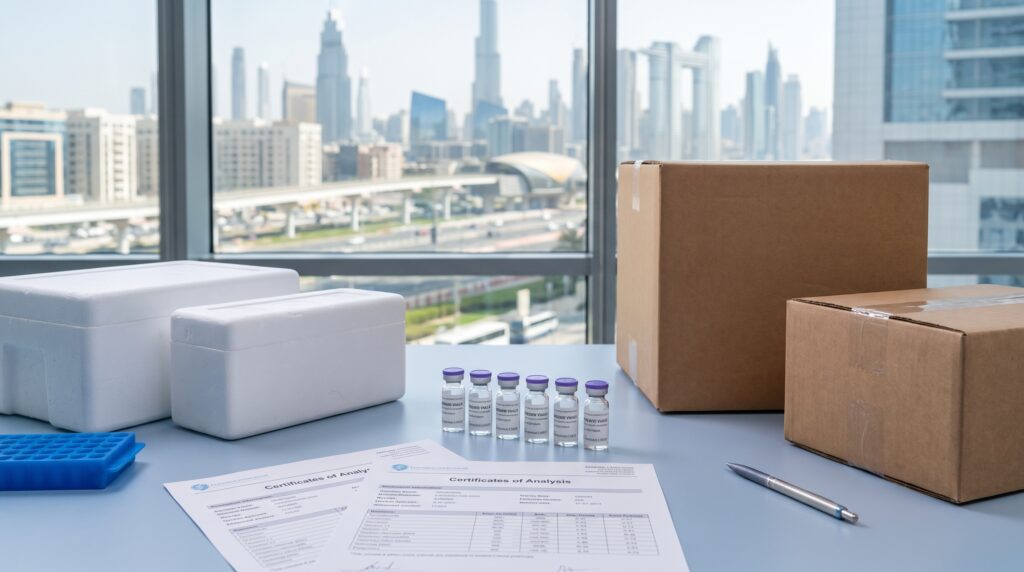
The most definitive way to spot fake peptides in the UAE is through the rigorous examination of lab documentation. A legitimate supplier will openly share their testing data. However, as the market has grown, counterfeiters have become adept at stealing, cropping, or even fabricating fake lab reports using outdated templates.
Understanding HPLC (Purity)
A valid COA must present High-Performance Liquid Chromatography (HPLC) data. This test determines the purity of the compound by separating its components. On the chart, you should see a single massive peak representing the main compound. The Area Under the Curve (AUC) for this peak should indicate a purity of 98% or higher, proving that synthesis byproducts, truncated peptide sequences, and manufacturing impurities have been successfully stripped away.
Understanding Mass Spectrometry (Identity)
While HPLC shows purity, Mass Spectrometry (MS) verifies the actual identity of the compound by measuring its mass-to-charge ratio (m/z). Every peptide sequence has a precise theoretical molecular weight. If you are procuring a specific metabolic compound, the MS data proves you are receiving that exact sequence. Counterfeiters often substitute expensive peptides with cheaper, generic amino acid fillers; a proper MS report instantly exposes this fraud.
Verifying the Lab and the Batch
Always check who issued the COA. Industry-standard independent labs, such as Janoshik, allow users to input a unique verification key directly on their portal to ensure the report was not tampered with. Furthermore, the batch number on the report must perfectly match the batch number on the vial you receive. If a supplier uses a single generic COA from three years ago for all their current stock, the documentation is essentially worthless.
Red Flag #2: Physical Signs of a Fake or Degraded Peptide
Beyond documentation, a physical inspection of the vial can reveal a lot about the quality of the product and its handling history. Research peptides are manufactured via lyophilization—a sophisticated freeze-drying process that removes water under a vacuum.
In a high-quality product, this leaves behind a solid, uniform “puck” or a fine, distinct powder at the bottom of the vial. If you receive a vial where the contents look gooey, melted, heavily discolored, or stuck entirely to the rubber stopper, it is highly likely that the vacuum seal was broken or the product suffered severe heat degradation. Furthermore, professional suppliers use medical-grade crimping on their aluminum caps; loose or easily rotated caps suggest an unsterile, manual bottling process.
Red Flag #3: Social Media Sellers and Telegram Scams
Online peptide scams in Dubai heavily rely on platforms like TikTok and Instagram to funnel buyers into encrypted messaging apps like Telegram. These operations frequently execute what is known as “escalation fraud.”
The anatomy of this scam is predictable: A seller advertises premium research peptides at aggressively discounted prices. Once the buyer agrees to purchase, the seller demands payment via unsecured methods—often direct cryptocurrency transfers or international wire apps. After payment is sent, the buyer is abruptly contacted by a “shipping agent” demanding an urgent, unexpected “customs clearance fee” or “insurance deposit” to release the package in the UAE.
Legitimate suppliers do not operate this way. Professional vendors utilize secure, encrypted B2B e-commerce gateways, offer transparent local shipping policies, and provide legitimate customer support channels (such as a registered UAE business WhatsApp or corporate email) to build trust and eliminate the risk of payment fraud.
Red Flag #4: Ignoring the Dubai Heat (Cold-Chain Logistics)
One of the most overlooked aspects of spotting a compromised peptide in the GCC is examining the supplier’s logistics network. The UAE climate is extreme. During the peak of summer, ambient temperatures easily exceed 45°C.
Peptides are delicate chains of amino acids. Even in their lyophilized state, prolonged exposure to high heat during transit can rapidly degrade their molecular stability, rendering the compound inert or structurally compromised before it even reaches your laboratory. If you purchase from an international supplier who ships via standard postal services, your package may sit on a sweltering airport tarmac or in an unconditioned customs warehouse for days.
To preserve chemical integrity, buyers must source from suppliers who maintain domestic stock in climate-controlled environments and utilize rapid, local dispatch. For researchers seeking stable compounds, utilizing services like UAE next day peptide delivery ensures vials move directly from a temperature-controlled facility to your lab bench, completely bypassing the risks of international freight delays and environmental stress.
Red Flag #5: Vague Customs Documentation and International Seizures
Many researchers attempt to bypass local suppliers by ordering directly from overseas chemical manufacturers in an attempt to cut costs. However, strict UAE customs regulations frequently result in the seizure of poorly documented chemical shipments.
Black-market suppliers often attempt to smuggle products into the UAE by mislabeling customs declarations—listing research peptides as “beauty care,” “essential oils,” or “water samples.” When customs officials inspect these packages and find unlabeled vials of white powder without corresponding Material Safety Data Sheets (MSDS) or clinical COAs, the shipment is immediately flagged, seized, and the buyer loses their entire investment.
Procuring compounds through an established local entity bypasses this friction entirely. Legitimate UAE-based suppliers have already navigated the complex importation, clearance, and regulatory documentation processes. By holding stock domestically, they absorb the customs risk, ensuring that researchers receive their materials promptly and legally.
How to Evaluate a Reliable Peptide Supplier in the GCC
Securing high-purity compounds requires shifting your focus from finding the absolute lowest price to finding the most transparent, professionally managed operation. When evaluating where to shop for research peptides in the UAE, look for these concrete indicators of reliability:
- Live Local Stock Checks: The supplier should accurately reflect what is physically in stock in the UAE, preventing unexpected multi-week delays caused by back-ordering from overseas.
- Unobscured Documentation: COAs should be high-resolution, unredacted, recently dated, and explicitly linkable to the exact batch numbers currently available for purchase.
- Clear Storage Guidelines: The vendor should demonstrate scientific expertise in handling, offering clear guidance on keeping lyophilized vials out of direct UV light and storing reconstituted compounds at the proper 2°C to 8°C refrigeration temperatures.
Conclusion & Final Sourcing Strategy
Learning how to spot fake peptides in the UAE ultimately comes down to verifying scientific documentation and demanding operational transparency from your supplier. The risks of counterfeit products—ranging from complete degradation due to heat exposure to the presence of unknown chemical contaminants—are simply too high to leave to chance.
Always insist on batch-matching, third-party HPLC and Mass Spectrometry reports. Protect your budget by avoiding unsecured Telegram transactions, and protect the integrity of your research by ensuring your supplier utilizes robust, temperature-controlled domestic logistics.
By treating procurement as a critical first step in your scientific methodology, you can confidently navigate the GCC market and secure the high-purity compounds your projects require. If you are ready to source verified, lab-tested compounds for your next project, explore NOVA Labs’ full catalog of research peptides, backed by transparent COAs, secure local payments, and specialized domestic shipping.
Disclaimer: The products mentioned in this article are strictly for research purposes only and are not intended for human consumption, therapeutic use, or diagnostic purposes.
References
- UAE Ministry of Health and Prevention (MoHAP) Circulars regarding counterfeit unregulated injections.
- Analytical standards for peptide synthesis and High-Performance Liquid Chromatography (HPLC) verification.
- Independent laboratory testing protocols via Mass Spectrometry (Janoshik).
- Fake Ozempic warning as UAE patients turn to social media sellers for weight-loss injections.
- Decoding the peptide craze: UAE experts explain the risky injectable wellness trend and what science says – Gulf News.
- Circular No.( 2024 / تعميـم رقـم ( 208 – DoH.
- Peptide Vendor Scams: 8 Red Flags + COA Checklist – NorthPeptide.
- How to Tell If a Peptide Supplier Is Legit.
- Fake Ozempic warning as UAE patients turn to social media sellers for weight-loss injections
- Decoding the peptide craze: UAE experts explain the risky injectable wellness trend and what science says – Gulf News
- Circular No.( 2024 / تعميـم رقـم ( 208 – DoH
- Peptide Vendor Scams: 8 Red Flags + COA Checklist (2026) – NorthPeptide
- How to Tell If a Peptide Supplier Is Legit
Frequently asked questions
How can I verify a peptide COA in the UAE?
You can verify a peptide COA by checking for a unique verification key provided by the independent testing lab (such as Janoshik). Enter this key on the lab's official website portal to confirm the report is authentic and matches the batch number on your vial.
Why do international peptide shipments get seized in Dubai?
International shipments frequently get seized if they lack proper commercial documentation, Material Safety Data Sheets (MSDS), or are intentionally mislabeled by overseas suppliers attempting to bypass strict UAE customs and health regulations.
What is the best way to store research peptides in the GCC heat?
Lyophilized (freeze-dried) peptides must be kept away from direct sunlight and stored in a freezer for long-term stability. To avoid the extreme UAE heat during transit, use a local supplier with cold-chain delivery. Once reconstituted for research, they must be stored in a refrigerator between 2°C and 8°C.
Are Telegram peptide sellers in the UAE safe to use?
No, Telegram sellers requesting unsecured peer-to-peer payments (like cryptocurrency or Western Union) are highly associated with escalation fraud and counterfeit products. Always use verified local suppliers with secure e-commerce checkout gateways and transparent B2B support.
Nova Labs buyer tools
Ready to verify stock, testing and delivery?
Use the product page and lab report section to check availability, documentation, delivery timing and support before placing an order.
- COA / test-report checks
- UAE delivery context
- Cold-chain handling
- COD and card payment options
- WhatsApp support