

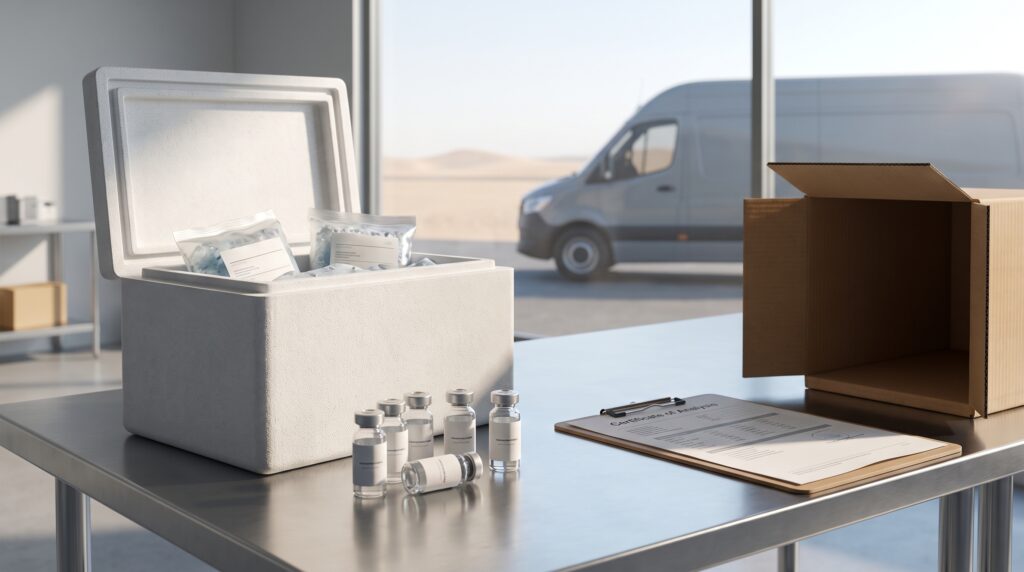
The Challenge of Procuring HPLC Tested Peptides in Qatar
Quick Answer: When sourcing HPLC tested peptides in Qatar, researchers must verify batch-specific Certificates of Analysis (COAs) showing >99% purity. Due to strict Qatar Customs regulations on chemical imports, sourcing from a regional GCC supplier ensures rapid delivery, bypassing international transit delays and securing cold-chain integrity.
Procuring verifiable research compounds in Doha and the wider Qatar region requires evaluating independent Certificates of Analysis (COAs) to verify purity exceeding 99%. Because direct international shipments from North America or Asia face intense scrutiny and delays at regional customs checkpoints, Qatari researchers increasingly rely on established GCC suppliers who provide batch-specific testing documentation alongside secure, localized delivery logistics.
Doha’s scientific infrastructure is expanding rapidly, driving demand for verified, lab-grade research compounds. Academic facilities and biomedical innovation centers set uncompromising technical standards for analytical precision. Consequently, procurement officers and lab managers evaluating an HPLC tested peptides supplier in Qatar expect rigorous, transparent documentation proving both the identity and purity of their procured materials.
Here is exactly what to look for when reviewing laboratory data, evaluating chemical stability, and navigating localized shipping constraints, ensuring your team secures the right materials without compromising on quality or facing logistical friction.
Retail Serums vs. Research-Grade Peptides
Before analyzing laboratory documentation, it is critical to distinguish between consumer retail goods and specialized research materials. In Qatari pharmacies and cosmetic retailers, buyers frequently encounter topical serums, anti-aging creams, and oral collagen supplements loosely labeled as “peptides.”
These consumer products are manufactured for cosmetic applications and dietary use, featuring widely varying, often undisclosed concentrations mixed with binders, excipients, and stabilizing agents. They are not suitable for controlled scientific environments.
Research-grade peptides, by contrast, are precisely synthesized single molecules supplied as lyophilized (freeze-dried) powder in sealed, sterile glass vials. These compounds are strictly intended for laboratory experimentation, cell culture studies, and in-vitro research. Because the integrity of scientific data relies entirely on the quality of the starting material, generic purity claims hold no scientific weight. Trust can only be established through batch-specific High-Performance Liquid Chromatography (HPLC) and Mass Spectrometry (MS) testing, documented in a verifiable COA.
Decoding the Testing Standard: What HPLC and MS Actually Prove
When evaluating any HPLC tested peptides shop in Qatar, the provided documentation must prove identity and purity through two distinct but complementary analytical techniques. Understanding these tests helps buyers spot incomplete, outdated, or falsified laboratory reports.
High-Performance Liquid Chromatography (HPLC) for Purity
HPLC is the definitive analytical method for establishing compound purity. During this process, the peptide sample is dissolved in a solvent and pumped under high pressure through a column packed with solid adsorbent material. Because different molecules interact with the column material at different rates, the components of the sample separate as they flow through.
The resulting output is a chromatogram chart. On a legitimate COA, you will see a large primary peak representing the target peptide, followed by any smaller peaks representing impurities, cleaved sequences, or byproducts from the synthesis process. The area under the primary peak is calculated against the total area of all peaks to determine the purity percentage. For rigorous in-vitro and analytical applications, buyers should demand a purity threshold of 99% or higher.
Mass Spectrometry (MS) for Molecular Identity
While HPLC confirms how pure a sample is, it does not prove what the sample is. That is the critical function of Mass Spectrometry. MS measures the exact mass-to-charge ratio (m/z) of the molecules in the sample. Every peptide has a specific, mathematically calculated molecular weight based on its unique amino acid sequence.
The COA must include the MS data, showing that the observed molecular weight matches the theoretical molecular weight of the target compound. Without this verification, a highly pure sample of an entirely incorrect compound could masquerade as your intended purchase, invalidating subsequent research.
The Qatar Customs Hurdle: The Necessity of Regional Sourcing
Logistics and customs clearance present the most significant barrier to sourcing research compounds in the region. Direct imports of research chemicals from overseas manufacturers frequently encounter intense scrutiny at Hamad International Airport and other commercial entry points.
Research compounds require specific declarations, and incoming shipments lacking accurate Material Safety Data Sheets (MSDS), correct Harmonized System (HS) codes, and localized clearance expertise are highly susceptible to prolonged delays, aggressive inspection, or outright seizure.
For this reason, informed buyers prioritize GCC-internal distribution networks. Sourcing from a supplier that maintains regional inventory—such as operations based in Dubai or specialized GCC fulfillment hubs—radically reduces transit friction. The final leg of delivery into Qatar occurs smoothly and rapidly, bypassing the administrative delays associated with international freight and ensuring the vials spend less time in transit.
Purity Checklist: How to Verify a Peptide COA
When reviewing laboratory documentation from a prospective vendor, apply this strict buyer’s checklist to ensure the data is legitimate, complete, and applicable to the specific vials you are purchasing.
- Batch Number Matching: The most common deceptive practice in the gray market is the recycling of old testing data. The batch or lot number printed on the physical vial you receive must perfectly match the batch number listed on the provided COA.
- Clear Chromatogram Chart: A COA should never simply list “Purity: 99.5%” in plain text. It must include the raw, high-resolution HPLC chromatogram graph showing the sharp primary peak, accompanied by the corresponding retention time data table.
- Mass Spec Confirmation: Ensure the document explicitly displays the theoretical molecular weight alongside the observed molecular weight from the MS analysis. These numbers should align within an extremely tight margin of error.
- Independent Third-Party Header: Check the header of the report. The most reliable documentation comes from independent, specialized analytical laboratories rather than in-house testing facilities, ensuring an objective evaluation of the manufacturer’s output.
- Recent Testing Dates: The analysis date should reasonably correspond to the current production cycle. Testing data that is three years old does not reflect the quality or degradation status of current inventory.
To see examples of what rigorous, transparent documentation looks like, researchers can review the detailed laboratory test reports provided by specialized suppliers. Public access to this data prior to checkout is a primary indicator of a trustworthy distributor.
Handling and Storage Stability in the Qatari Climate
A critical concern for buyers in Doha is how the extreme Qatari heat impacts peptide integrity during transit. Fortunately, the lyophilization (freeze-drying) process renders these compounds remarkably stable.
In their freeze-dried state, high-quality research compounds are resilient to the short-term temperature fluctuations encountered during regional express shipping. The true vulnerability occurs only after the compound has been reconstituted with a solvent such as bacteriostatic water.
Once in a liquid state, the molecular structure becomes fragile and must be immediately stored in a refrigerated environment (ideally between 2°C and 8°C) to prevent rapid degradation. Unmixed lyophilized vials should ideally be kept in a freezer (-20°C) for optimal long-term stability extending up to 24 months.
When ordering, verify that the supplier utilizes robust packaging that protects the glass vials from physical shock and limits direct UV light exposure during the brief transit window from the GCC hub to your laboratory facility.
Payment, Support, and Logistics Context
Beyond purity, the operational reliability of your supplier matters. International chemical suppliers often require complex wire transfers that trigger internal banking flags, or they lack support channels in the Gulf Standard Time (GST) zone.
Top-tier GCC suppliers offer streamlined logistics. Look for vendors that provide secure, localized payment gateways or professional invoicing structures. Furthermore, having access to immediate customer support—such as direct WhatsApp communication or responsive email support operating within UAE/Qatar business hours—is invaluable when coordinating delivery times or requesting specific MSDS documentation for institutional compliance.
Sourcing Verified Peptides from NOVA Labs
For research professionals and quality-conscious buyers in Qatar, mitigating the risks of compromised purity and customs friction is paramount. NOVA Labs addresses these precise challenges by supplying premium, lyophilized research compounds supported by strict analytical testing protocols.
By operating a robust GCC-centric fulfillment network, we bypass the traditional barriers of direct international importing, ensuring your materials arrive promptly and securely. Researchers demanding absolute reliability in both compound purity and logistics can explore our fully documented inventory through our dedicated research peptide shop and verify our standards via our public laboratory test reports.
Securing top-tier materials requires diligence. By prioritizing independent COAs, understanding analytical data, and utilizing regional GCC supply chains, Qatari researchers can maintain the absolute integrity of their laboratory work.
Disclaimer: NOVA Labs products are sold exclusively for laboratory research purposes. They are not intended for human consumption, diagnostic purposes, therapeutic use, or medical treatment. Always handle compounds in accordance with standard laboratory safety protocols.
References
- National Center for Biotechnology Information (NCBI). “High-Performance Liquid Chromatography in Peptide Analysis.” PubChem Compound Summary.
- Al-Thani, A. et al. “Advancements in Proteomics and Biochemical Research in the GCC.” Middle East Journal of Science, 2022.
- World Customs Organization (WCO). “Harmonized System (HS) Codes for Laboratory Chemicals and Reagents.”
- ResearchGate. “Stability of Lyophilized Peptides under Various Temperature Conditions.” Chemical Analysis Quarterly, 2021.
Disclaimer: The products mentioned in this article are for research purposes only and are not intended for human consumption.
- Peptides Lab GCC – High-Purity Research Peptides | GCC Supply for Laboratories
- Proteomics | Weill Cornell Medicine – Qatar
- Qatar Peptide Synthesis Market | Size & Share 2026 – 6Wresearch
- Importing Peptides : r/qatar – Doha – Reddit
- Certificate of Analysis | Lab-Verified Research Peptides | PEAK_PEPTIDE
- How Are Peptides Tested? HPLC, COA & Purity Explained (2026)
Frequently asked questions
What is the minimum purity level for HPLC tested peptides in Qatar?
Scientific research applications generally require a minimum purity of 99%, verified by batch-specific High-Performance Liquid Chromatography (HPLC) data, to ensure experimental integrity and prevent skewed data from contaminants.
How do I correctly verify a peptide COA?
Cross-reference the exact batch number on your physical vial with the provided Certificate of Analysis. Always check for a clear, high-resolution HPLC chromatogram chart and confirm that the Mass Spectrometry (MS) data accurately matches the target molecule's theoretical weight.
Will Qatar Customs seize research peptides shipped internationally?
Direct international imports of research chemicals face high scrutiny, requiring specialized declarations, MSDS, and HS codes. Without these, shipments face potential seizure or prolonged delays at Hamad International Airport, which is why researchers typically utilize GCC-based suppliers for secure delivery.
Can lyophilized peptides survive shipping in Qatari heat?
Yes, lyophilized (freeze-dried) peptides are highly stable and resilient during short transit times from GCC hubs, even in warm climates. Upon arrival in Qatar, unmixed vials should be stored in a freezer away from direct UV light for long-term stability.
What is the difference between cosmetic peptides and research peptides?
Cosmetic peptides are blended into creams or serums with various excipients for consumer topical use. Research-grade peptides are highly purified, single-molecule lyophilized compounds intended strictly for controlled laboratory environments and in-vitro study.
Nova Labs buyer tools
Ready to verify stock, testing and delivery?
Use the product page and lab report section to check availability, documentation, delivery timing and support before placing an order.
- COA / test-report checks
- Qatar delivery context
- Cold-chain handling
- COD and card payment options
- WhatsApp support